

Every time a customer places an order, a series of carefully coordinated steps is set into motion behind the scenes. Products are located, prepared, packaged, and dispatched. That entire sequence is known as order fulfillment.
In this guide, everything a Canadian business owner needs to know about order fulfillment is covered. The definition is explained, the full process is broken down step by step, the available fulfillment models are compared, and what to look for in a fulfillment partner in Canada is outlined.
Delibrex has been handling order fulfillment for businesses across Western Canada since 1974. Operating two warehouses in Edmonton, Alberta, and holding Health Canada licensing for regulated product handling, Delibrex brings over 50 years of logistics experience to every client relationship. That experience is reflected throughout this guide.
Quick Answer: What Is Order Fulfillment?
Order fulfillment is the complete process by which a customer’s order is received, picked from inventory, packed, and delivered to its final destination. It begins the moment an order is placed and ends when that order arrives in the customer’s hands, or when a return has been processed.
In other words, order fulfillment is the bridge between a completed sale and a satisfied customer.
What Does Order Fulfillment Mean? (Full Definition)
The phrase order fulfillment refers to the end-to-end operational workflow that moves goods from storage to the customer’s door. In Canadian and British English, it is also spelled as order fulfilment. Both spellings refer to the same process and are accepted equally.
Order fulfillment can be understood from several different angles, depending on the perspective of the person asking.
| Perspective | What Order Fulfillment Means |
| E-commerce business owner | The steps taken to ship online orders to customers accurately and on time |
| Warehouse operator | The picking, packing, and dispatch of goods from a storage facility |
| Supply chain manager | A critical stage in the supply chain that connects inventory to the end consumer |
| Customer | The experience of placing an order and receiving it as expected |
| 3PL provider | A managed service that handles warehousing, picking, packing, and shipping on behalf of a client business |
Regardless of perspective, the core meaning remains consistent. Order fulfillment is the process by which customer orders are completed, from start to finish.
Is Order Fulfillment Part of Logistics and the Supply Chain?
Yes. Order fulfillment is a central component of both logistics and supply chain management. More specifically, it falls within outbound logistics, which refers to the movement of finished goods from a warehouse or distribution centre to the end customer.
Furthermore, order fulfillment is closely connected to warehousing, inventory management, distribution, and transportation. Together, these functions form what is referred to as the supply chain.
In Canada, businesses that partner with a third-party logistics provider, commonly called a 3PL, are able to consolidate many of these functions under one operational roof. That is precisely the model offered by Delibrex, which has operated two Edmonton-based warehouses serving Western Canada since 1974.
The Order Fulfillment Process: Step by Step
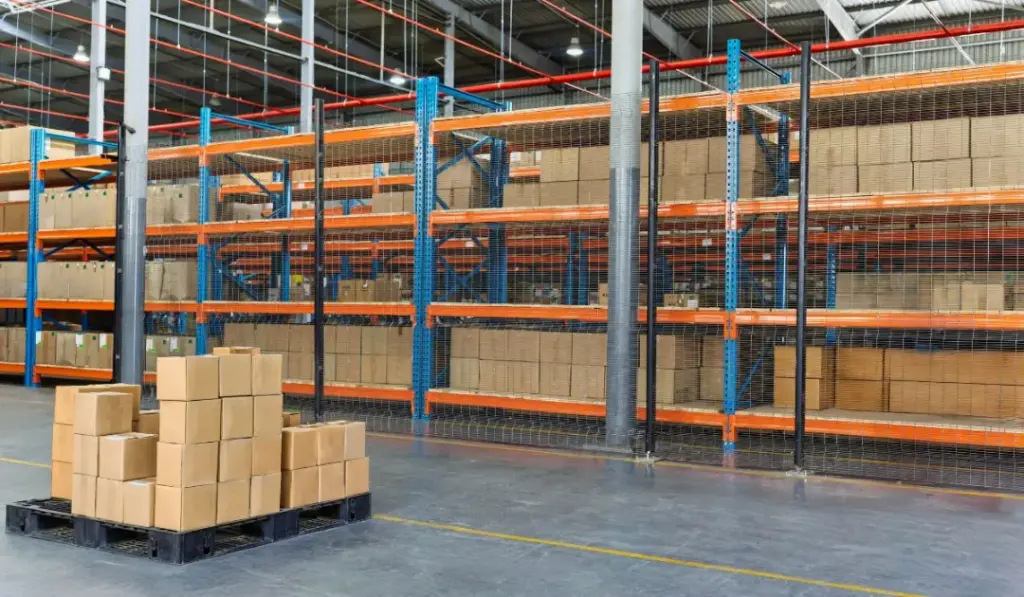
The order fulfillment process is made up of several distinct stages. Each stage must be completed correctly for an order to arrive on time and without error. Below, each step is described in detail.
Step 1: Inventory Receiving
Before any order can be fulfilled, inventory must first be received at the warehouse or fulfillment centre. During this stage, inbound shipments from suppliers or manufacturers are checked in, counted, and inspected for quality. Items are then assigned storage locations within the facility.
Proper receiving is essential. Errors at this stage, such as miscounts or misplacements, often cause inaccuracies and delays further down the fulfillment process.
Step 2: Inventory Storage
Once inventory has been received and verified, it is stored in an organized and structured manner. Items are placed on shelves, in bins, on pallets, or in dedicated zones based on product type, size, temperature requirements, or picking frequency.
At Delibrex, warehousing is carried out across two Edmonton locations. Storage capabilities include food-grade handling, pharmaceutical storage under Health Canada licensing, temperature-controlled environments, and industrial product management.
Step 3: Order Processing
When a customer places an order, it is received by the fulfillment team through an order management system. The order is reviewed, verified, and forwarded to the warehouse floor for picking.
During this stage, checks are carried out to confirm that all ordered items are in stock, that the delivery address is valid, and that the order details are accurate.
Step 4: Order Picking
Picking is the process of locating and collecting each item in a customer’s order from its designated storage location within the warehouse. Pickers follow a picking list that specifies which items are needed, in what quantities, and where they are stored.
Several picking methods are commonly used in fulfillment operations.
- Single order picking: One picker collects all items for one order at a time. This approach is suited to smaller operations or complex, high-value orders.
- Batch picking: A picker collects items for multiple orders at once. This method improves efficiency in high-volume environments.
- Zone picking: The warehouse is divided into zones. Each picker is responsible for a specific zone, and orders are assembled as they move through each zone.
- Wave picking: Orders are grouped by shipping window, carrier, or product type and picked in scheduled waves for maximum throughput.
Step 5: Packing
Once all items for an order have been picked, they are brought to a packing station and prepared for shipment. Appropriate packaging materials are selected based on the size, weight, and fragility of the goods.
Well-packed orders are significantly less likely to be damaged in transit. This reduces the risk of returns, customer complaints, and associated costs.
Common packing materials used in Canadian fulfillment operations include the following.
- Corrugated cardboard boxes in various sizes
- Poly mailers and bubble-lined envelopes for soft goods
- Void fill materials such as air pillows and kraft paper
- Custom inserts and branded packaging for e-commerce clients
- Pallet wrapping and stretch film for bulk or industrial shipments
Step 6: Shipping
After an order has been packed, a shipping label is generated and applied. The package is then handed off to a carrier for last-mile delivery to the customer.
In Canada, common carriers used in fulfillment operations include Canada Post, FedEx, UPS, and Purolator. The carrier selected depends on the delivery zone, required service level, and the shipping cost preference of the business.
Shipping confirmation, including tracking information, is sent to the customer so that the progress of the delivery can be monitored.
Step 7: Returns Processing
Returns are a natural part of any fulfillment operation. When a customer sends back an item, it is received at the warehouse, inspected, and either restocked, repaired, or disposed of appropriately.
An efficient returns process, often called reverse logistics, is important for maintaining customer satisfaction and keeping inventory records accurate.
The table below summarizes the full order fulfillment process at a glance.
| Step | Stage | What Happens |
| 1 | Receiving | Inbound inventory is checked in, counted, and quality-verified |
| 2 | Storage | Items are organized and stored in appropriate warehouse zones |
| 3 | Order Processing | The order is confirmed and forwarded to the warehouse floor |
| 4 | Picking | Items are located and collected from their storage locations |
| 5 | Packing | Items are packed securely and prepared for shipment |
| 6 | Shipping | Packages are labelled and handed to a carrier for delivery |
| 7 | Returns | Returned items are inspected and restocked or properly processed |
Types of Order Fulfillment: What Are the Options?
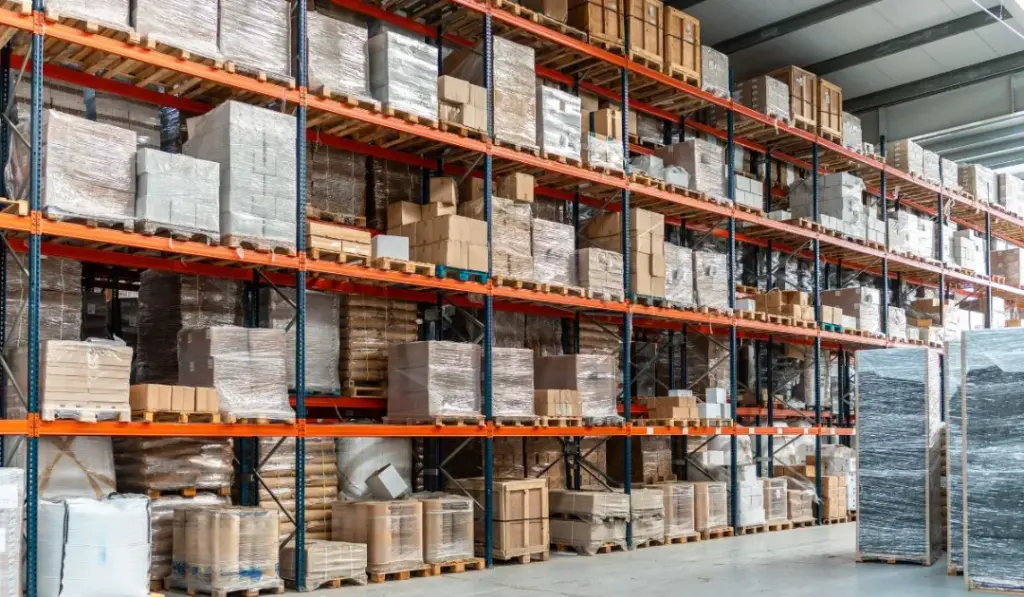
Order fulfillment is not a one-size-fits-all process. Different businesses use different fulfillment models depending on their size, order volume, budget, and product type. The three most commonly used models are described below.
In-House Fulfillment
With in-house fulfillment, a business manages the entire process using its own staff, space, and systems. This approach provides direct control over every step. However, it can become costly and difficult to manage as order volumes grow.
In-house fulfillment is generally best suited for businesses with the following characteristics.
- Low to moderate order volumes
- Highly specialized products that require unique or delicate handling
- Sufficient warehouse space and an in-house logistics team
Third-Party Logistics (3PL) Fulfillment
In 3PL fulfillment, the process is outsourced to a specialist logistics provider. The 3PL handles warehousing, picking, packing, and shipping on behalf of the client. The client retains visibility over their inventory and orders through a shared technology platform.
This model is widely used by growing e-commerce businesses, manufacturers, and distributors across Canada. It offers scalability, access to established carrier networks, and significantly reduced overhead costs.
Delibrex is a 3PL provider based in Edmonton, Alberta. Since 1974, Delibrex has supported businesses across Western Canada with warehousing, order fulfillment, distribution, and e-commerce logistics services. Health Canada licensing further enables Delibrex to handle regulated and pharmaceutical products in full compliance with Canadian standards.
Dropshipping
Dropshipping is a fulfillment model in which a business accepts customer orders but holds no physical inventory. Instead, orders are forwarded directly to the supplier or manufacturer, who ships the product on behalf of the seller.
While this model requires minimal upfront investment, it comes with trade-offs. Control over shipping times, product quality, and the customer experience is more limited compared to other fulfillment models.
| Fulfillment Model | Who Controls the Process | Best For | Main Limitation |
| In-House | The business itself | Small businesses with low order volumes | Difficult to scale efficiently |
| 3PL | An outsourced logistics provider | Growing brands and mid-to-large businesses | Less direct control over day-to-day operations |
| Dropshipping | The supplier or manufacturer | Sellers with no inventory investment | Limited control over quality and delivery times |
Why Order Fulfillment Matters for Canadian Businesses

Order fulfillment may not always be visible to the customer, but its impact is felt in every transaction. Getting it right is essential for several reasons.
It Shapes the Customer Experience
Customers expect their orders to arrive on time, in good condition, and exactly as described. When those expectations are met, loyalty is built. When they are not met, negative reviews accumulate and repeat purchases are lost.
In Canada’s competitive e-commerce landscape, delivery speed and accuracy have become key differentiators. A well-managed fulfillment process contributes directly to positive customer outcomes.
It Has a Significant Impact on Business Costs
Fulfillment represents a major operational cost for most product-based businesses. From warehousing and labour to packaging materials and carrier fees, expenses add up quickly. Poor fulfillment practices, such as mispicks, excessive returns, and inefficient storage layouts, add further unnecessary costs.
By outsourcing to a 3PL, businesses are able to convert fixed warehouse overheads into variable costs, paying only for what is used. This improves cash flow and reduces financial risk, particularly during lower-volume periods.
It Enables Business Growth
As a business grows, its fulfillment requirements grow alongside it. Order volumes increase, product lines expand, and new markets are entered. A scalable fulfillment operation is essential for supporting that growth without service disruption.
Working with an established 3PL like Delibrex allows businesses to scale their logistics capacity quickly, without the need to invest in additional warehouse space, equipment, or headcount.
It Supports Compliance in Regulated Industries
In certain sectors, order fulfillment is subject to strict regulatory standards. Health Canada-regulated products, pharmaceutical items, and food-grade goods must be stored, handled, and shipped in compliance with applicable Canadian guidelines.
Delibrex holds Health Canada licensing, which means that regulated products are handled in full compliance with Canadian requirements. This is a significant differentiator in the Western Canadian 3PL market and provides clients with confidence that their products are being managed to the required standard.
How to Choose an Order Fulfillment Provider in Canada
Choosing the right fulfillment partner is one of the most consequential decisions a growing business will make. The following factors are worth evaluating carefully during the selection process.
Location and Geographic Coverage
The location of a 3PL provider’s warehouse directly affects how quickly orders can reach customers and how much shipping costs. A provider based in Western Canada is better positioned to serve customers in Alberta, British Columbia, and Saskatchewan with shorter transit times and lower freight costs.
Industry Experience and Credentials
Experience matters greatly in logistics. A provider that has been operating for decades brings refined processes, established carrier relationships, and institutional knowledge that newer competitors cannot replicate. Delibrex has been in operation since 1974, making it one of the most experienced 3PL providers in Edmonton.
Compliance and Licensing
For businesses in regulated industries, confirming that a fulfillment provider holds the necessary licences and certifications is essential. Health Canada licensing is required for the storage and handling of certain pharmaceutical and natural health products, and not all 3PL providers hold this credential.
Technology and Inventory Visibility
Modern fulfillment operations rely on integrated technology to track inventory in real time, process orders efficiently, and provide clients with timely reporting. A provider with strong systems integration capabilities is able to connect with major e-commerce platforms and order management tools.
Scalability
A reliable fulfillment partner grows with your business. Evaluate whether the provider has the capacity to handle seasonal demand spikes, product line expansions, and increased order volumes without compromising accuracy or delivery timelines.
Transparent Pricing
Fulfillment pricing should be clear and predictable. A trustworthy provider offers transparent fees for receiving, storage, picking, packing, and shipping, without unexpected surcharges appearing on monthly invoices.
| Criteria | Why It Matters | Delibrex’s Advantage |
| Location | Shorter transit times and lower shipping costs | Two warehouses in Edmonton, serving all of Western Canada |
| Experience | Established processes and trusted carrier relationships | Over 50 years in operation since 1974 |
| Compliance | Required for regulated and pharmaceutical products | Health Canada licensed facility |
| Scalability | Supports business growth without service disruption | Flexible capacity across two Edmonton warehouse locations |
| Technology | Real-time inventory visibility and order accuracy | Integrated order management and reporting systems |
| Transparent Pricing | Predictable costs and accurate financial planning | Clear fee structure with no hidden charges |
Frequently Asked Questions About Order Fulfillment
What is order fulfillment in simple terms?
Order fulfillment is the process of receiving a customer’s order, picking the right products from a warehouse, packing them securely, and shipping them to the customer. It covers everything that happens between when an order is placed and when it is delivered.
What does order in fulfillment mean?
When an order is described as being in fulfillment, it means the order has been received and is currently being processed at the warehouse. Items are being picked and packed, but the order has not yet been shipped. It is the stage between order confirmation and dispatch.
Is order fulfillment the same as shipping?
No. Shipping is just one step within the order fulfillment process. Fulfillment also includes inventory storage, order processing, picking, and packing. Shipping is the final delivery step that follows all of those earlier stages.
What is a good example of order fulfillment?
A practical example would be a Canadian e-commerce retailer selling natural health supplements. When a customer places an order, the retailer’s 3PL provider receives the order, locates the product in their Health Canada-licensed warehouse, packs it in protective packaging, and ships it via Canada Post to the customer’s address in British Columbia. The customer receives tracking information, and the package arrives within the expected delivery window.
What is the difference between order fulfillment and order management?
Order management refers to the broader tracking and coordination of orders across all sales channels, from placement through to delivery. Order fulfillment is the physical execution of those orders within a warehouse or fulfillment centre. The two are closely linked, and many 3PL providers offer integrated systems that handle both.
Is order fulfillment part of the supply chain?
Yes. Order fulfillment is a key stage within the broader supply chain, specifically within outbound logistics. It is the operational link between stored inventory and the end customer. Other supply chain stages include procurement, manufacturing, inbound logistics, and distribution.
What is the order fulfillment rate?
The order fulfillment rate is a metric that measures what percentage of customer orders are fulfilled completely and on time, without errors. A high fulfillment rate indicates that a warehouse is operating efficiently. Most professional 3PL providers track this metric closely and report on it to their clients.
Conclusion: Order Fulfillment Is at the Core of Every Successful Business
Order fulfillment is a foundational part of any business that sells and ships physical products. It is the structured process by which customer orders are picked, packed, and delivered on time and in full. When managed well, it builds customer trust, controls operational costs, and supports sustainable growth.
For Canadian businesses, the unique demands of the domestic market make choosing the right fulfillment partner especially important. Geographic coverage, regulatory compliance, carrier relationships, and operational experience all play a role in determining how well a 3PL provider can serve your business.
Delibrex has been meeting those demands for businesses across Western Canada since 1974. With two Edmonton warehouses, Health Canada licensing, and over five decades of 3PL experience, Delibrex is equipped to manage order fulfillment for businesses of all sizes and product types.
Phone: 780-455-7200
Address: 16507 116 Ave NW, Edmonton, AB T5M 3V1
Website: www.delibrex.com
Explore More on Delibrex.com