
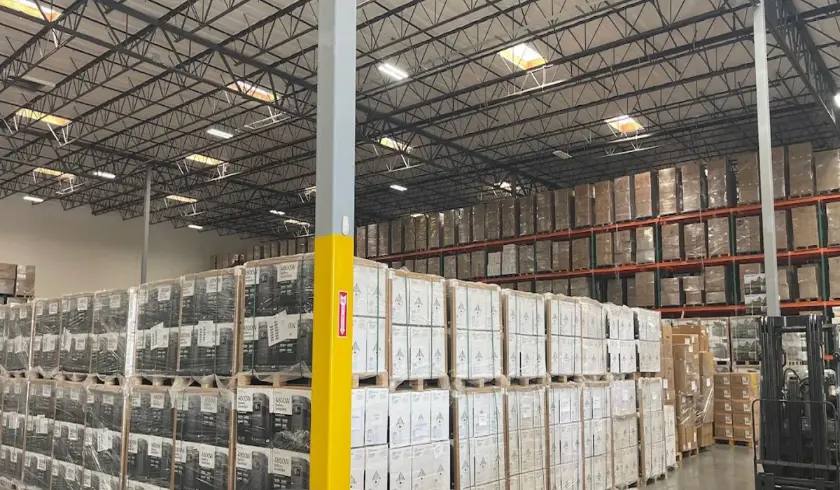
For businesses across Canada from ecommerce brands outgrowing their garage to manufacturers distributing products nationwide finding the right warehousing solution is one of the most consequential operational decisions on the table.
The questions are straightforward: How much does warehouse space actually cost in Canada? What is included in a warehousing package? And with dozens of options available, which warehouse is best for a specific business?
The answers, unfortunately, are rarely as simple as the questions. Canada warehousing and logistics pricing is shaped by location, facility type, storage method, product category, and the level of service included. A pallet stored in a basic cold-storage rack in Edmonton carries a very different cost than a bin of pharmaceutical inventory stored in a Health Canada Licensed facility even though both technically fall under “warehousing.”
This guide breaks down what warehousing services in Canada actually include, how pricing is structured, what typical costs look like across different models, and how to determine which warehouse is the best fit for a specific business.
What Is Included in a Canadian Warehousing Package?
A warehousing package from a professional 3PL provider is more than just rented shelf space. It is an integrated service that covers the full lifecycle of inventory management — from the moment products arrive at the facility to the moment they leave.
A comprehensive warehousing package typically includes:
Inventory Receiving
• Products are unloaded from delivery vehicles at the warehouse dock • Shipments are inspected for damage, counted, and verified against purchase orders • Items are labelled with warehouse barcodes (if not already tagged) and logged into the inventory management system • Products are transported to their designated storage locations
Storage and Space Allocation
Depending on the product type and volume, storage is provided through one or more of these methods:
| Storage Type | Description | Best For |
|---|---|---|
| Pallet racking | Full pallets stored on industrial racking systems | Bulk inventory, B2B distribution, high-volume products |
| Bin and shelf storage | Individual items stored in bins or on shelving units | Ecommerce SKUs, small to medium products, pick-and-pack operations |
| Floor storage | Large or oversized items stored directly on the warehouse floor | Heavy equipment, bulk materials, irregular-sized inventory |
| Temperature-controlled storage | Dedicated zones maintained at specific temperature ranges | Perishable goods, pharmaceutical products, temperature-sensitive inventory |
| Specialized compliant storage | Licensed or certified storage areas with regulatory oversight | Health Canada–regulated products, chemical and dangerous goods, food-grade inventory |
Inventory Management and Tracking
• Real-time inventory visibility through a warehouse management system (WMS) and client portal • Stock rotation using FIFO (first in, first out) or FEFO (first expiry, first out) protocols • Cycle counting for ongoing accuracy verification • Low-stock alerts and reorder notifications • Lot tracking and expiry date management where applicable
Order Fulfilment (If Included)
Many warehousing packages include integrated order fulfilment services — meaning the warehouse is not just storing products, but also picking, packing, and shipping orders as they come in. This is particularly relevant for ecommerce and retail businesses that need storage and shipping handled under one roof.
Distribution and Outbound Logistics
• Carrier coordination for outbound shipments • Freight forwarding for B2B and pallet-scale deliveries • Cross-docking for products that need to move through the warehouse quickly without long-term storage • Shipment tracking and delivery confirmation
For businesses requiring full distribution services alongside warehousing, integrated packages eliminate the complexity of coordinating multiple vendors.

How Much Does Warehouse Rent Cost in Canada?
One of the most searched questions about warehousing is simple: how much does warehouse rent cost? The answer depends entirely on the model being considered.
Option 1: Leasing Your Own Warehouse Space
For businesses that want to operate their own warehouse, commercial warehouse rental rates in Canada vary significantly by city and region:
| City / Region | Estimated Rent per Sq Ft (Annual) | Notes |
|---|---|---|
| Toronto (GTA) | $14 – $22+ | Highest demand market; extremely tight vacancy rates |
| Vancouver | $16 – $24+ | Premium pricing driven by limited industrial land |
| Montreal | $8 – $14 | More affordable than Toronto/Vancouver; growing demand |
| Calgary | $8 – $13 | Moderate costs; strong industrial base |
| Edmonton | $7 – $12 | Among the most affordable major markets in Canada |
| Winnipeg / Saskatoon | $6 – $10 | Lowest tier among major centres |
These rates cover the raw space only. They do not include the additional costs required to operate a warehouse:
• Staffing — Warehouse workers, supervisors, and management ($40,000 – $60,000+ per employee annually) • Equipment — Forklifts, pallet jacks, shelving, packing stations, barcode scanners ($10,000 – $100,000+) • Technology — Warehouse management system, inventory software, shipping label systems ($200 – $2,000+/month) • Insurance — Property, liability, and inventory coverage • Utilities — Heating, cooling, electricity (significantly higher for temperature-controlled facilities) • Maintenance — Building upkeep, equipment servicing, safety compliance
When all costs are totalled, operating a private warehouse in a major Canadian city typically costs $15 – $40+ per square foot annually — before any product has been stored or shipped.
Option 2: 3PL Warehousing (Outsourced Storage)
For businesses that do not want the overhead of running their own facility, 3PL warehousing provides a fundamentally different cost model. Rather than paying for empty square footage, businesses pay only for the space and services they actually use.
Typical 3PL warehousing rates in Canada:
| Fee Type | Typical Range | What It Covers |
|---|---|---|
| Pallet storage | $10 – $40 per pallet/month | Monthly storage of one standard pallet in the warehouse |
| Bin / shelf storage | $3 – $10 per bin/month | Storage of individual SKUs in pick bins or on shelving |
| Per cubic foot | $0.45 – $1.00 per cu ft/month | Used for irregularly sized items or when space is metered by volume |
| Receiving fees | $5 – $25 per pallet | Processing inbound inventory shipments |
| Pick and pack | $1.50 – $4.00 per order (base) | Order fulfilment when integrated with warehousing |
| Shipping | Variable (carrier-dependent) | Outbound shipping at volume-negotiated rates |
The 3PL model eliminates the capital requirements of a private warehouse. There are no leases to sign, no equipment to purchase, no staff to hire, and no technology systems to implement. Everything is included in the service — and costs scale directly with business volume.
For a more detailed breakdown of fulfilment-specific costs, the 3PL pricing guide provides comprehensive rate information.
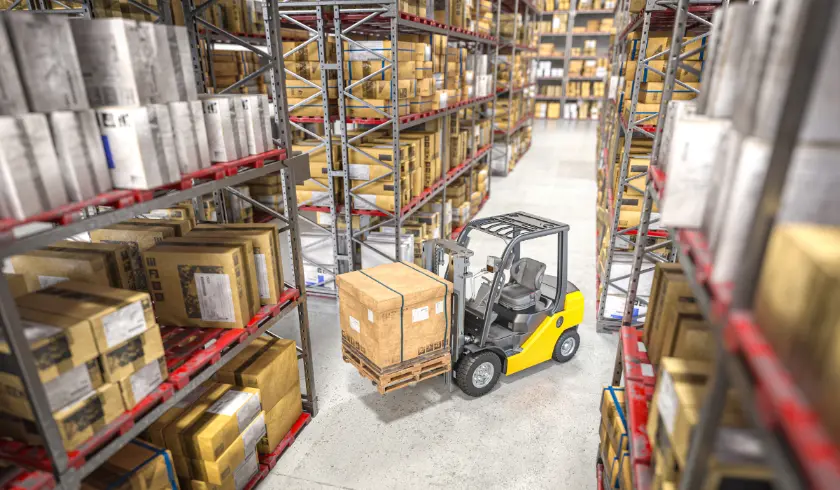
Which Warehouse Is Best? How to Evaluate Your Options
With multiple warehousing models and providers available across Canada, determining which warehouse is best for a specific business requires evaluating several critical factors.
Location and Market Proximity
Warehouse location directly impacts shipping speed and freight cost. The closer inventory is to the customer base, the faster and cheaper deliveries become.
For businesses targeting Western Canadian markets, Edmonton offers a strong value proposition:
• Lower facility costs than Vancouver or Toronto — savings that translate into lower per-unit storage rates • Central access to Alberta, British Columbia, and Saskatchewan within 1–3 day ground delivery • Proximity to major highway and rail corridors connecting Western and Central Canada • Balanced national reach for businesses shipping coast to coast from a single location
Delibrex’s two warehouses at 16507 116 Ave NW, Edmonton, AB T5M 3V1 are strategically positioned to serve this geography efficiently.
Storage Capabilities and Compliance
Not every warehouse can handle every product type. The specific storage capabilities required should be a primary filter:
| Product Category | Required Capability | Delibrex Availability |
|---|---|---|
| Standard consumer / industrial goods | Ambient pallet and shelf storage | ✓ |
| Perishable and temperature-sensitive products | Temperature-controlled environment | ✓ |
| Pharmaceutical and natural health products | Health Canada Licensed facility | ✓ |
| Chemical and hazardous materials | WHMIS and TDG-compliant storage | ✓ |
| Food and beverage products | Food-grade warehousing | ✓ |
| Oversized or heavy equipment | Floor storage with appropriate handling equipment | ✓ |
For businesses in regulated industries, compliance is non-negotiable. A warehouse that cannot provide the necessary licensing or certification is not a viable option — regardless of price.
Technology and Visibility
A modern warehouse should provide:
• Real-time inventory tracking through a client portal or API integration • Automated order processing for businesses that need ecommerce fulfilment • Low-stock alerts and detailed reporting • Integration with platforms like Shopify, Amazon, and WooCommerce (if applicable)
Warehouses operating on paper-based or manual systems introduce inventory accuracy risks that compound over time.
Scalability
The right warehouse partner accommodates growth without requiring the business to move facilities. Storage capacity, staffing levels, and processing throughput should all be scalable — handling seasonal demand spikes, new product launches, and sustained business growth without service disruptions.
Service Integration
For businesses that need more than just storage, a warehouse that also provides fulfilment, shipping, and distribution under one roof eliminates the complexity and cost of coordinating multiple vendors. An integrated warehousing and logistics provider is almost always more efficient than managing separate storage and shipping relationships.
Provider Experience and Track Record
A warehouse provider’s operational history matters. Decades of experience translate into refined processes, trained staff, established carrier relationships, and the ability to handle unexpected challenges without disrupting client operations.
Delibrex has been operating warehousing and logistics services in Edmonton since 1974 — over 50 years of continuous operation as a family-owned Canadian business.
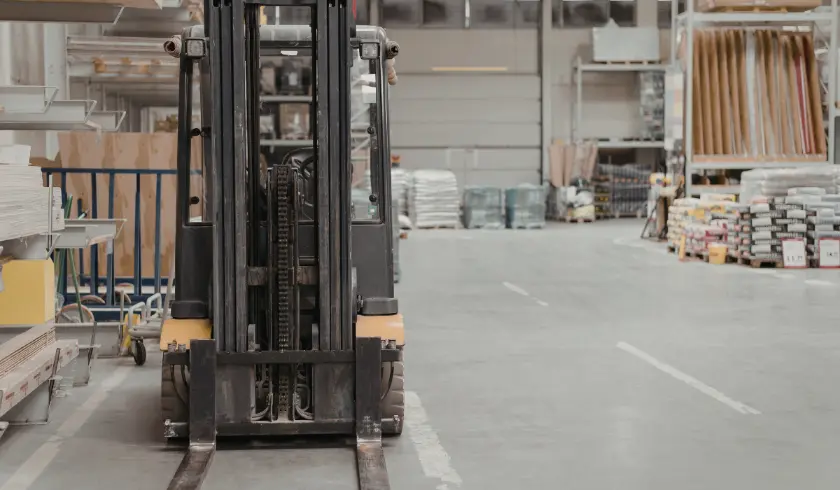
Can a Warehouse Handle Specialized Products?
A common question from businesses with non-standard inventory is straightforward: can a warehouse handle products that require specialized storage, compliance certification, or unique handling procedures?
The answer depends entirely on the provider. Many general-purpose warehouses are limited to ambient, shelf-stable products. For anything beyond that — temperature-sensitive goods, pharmaceutical inventory, hazardous materials, or food products — the warehouse must have specific infrastructure and certifications in place.
Delibrex’s Edmonton facilities are purpose-built for this kind of versatility:
• Health Canada Licensed — Authorized for storage and distribution of pharmaceutical products, natural health products, and medical devices • Temperature-controlled zones — Maintained at specified ranges for products requiring cold chain integrity or climate stability • Chemical and dangerous goods storage — Fully compliant with WHMIS (Workplace Hazardous Materials Information System) and TDG (Transportation of Dangerous Goods) regulations • Food-grade warehousing — Environments maintained to the standards required for safe food and beverage storage, including sanitation protocols and temperature monitoring
This breadth of capability means businesses do not need separate facilities for different product categories. Standard consumer goods, regulated pharmaceutical inventory, and temperature-sensitive food products can all be managed within the same operational partnership.
For businesses wanting to understand how these warehousing capabilities connect to the broader supply chain, the guide on 3PL and supply chain management provides detailed context.
Warehousing Packages: What to Expect from a 3PL Provider
When requesting a warehousing quote from a Canadian 3PL provider, the proposal should clearly define:
• Storage allocation — The type and quantity of space assigned (pallets, bins, cubic footage, or dedicated area) • Receiving procedures — How inbound inventory is handled, inspected, and catalogued • Inventory management — The WMS platform used, client portal access, and reporting capabilities • Fulfilment services (if applicable) — Pick-and-pack operations, shipping, and carrier management • Compliance and handling — Any specialized storage requirements and the certifications that support them • Pricing structure — Itemized fees for every service category, including minimums and potential surcharges • Contract terms — Duration, scalability provisions, and termination conditions
A transparent provider presents all of this information upfront — with no hidden fees discovered months into the relationship. If a warehousing quote cannot be broken into clear, itemized components, that is a signal to continue evaluating.
Start with the Right Warehouse Partner
Warehousing is the foundation of every supply chain. The facility that stores inventory, processes orders, and ships products determines how efficiently, accurately, and cost-effectively a business operates. Choosing the wrong warehouse means overpaying for underperformance. Choosing the right one means building a scalable, compliant, and reliable logistics operation.
Delibrex has been that foundation for Canadian businesses since 1974. With two Edmonton warehouses, Health Canada licensing, temperature-controlled and food-grade environments, dangerous goods capabilities, and a multi-carrier shipping network that covers every corner of the country, the infrastructure is proven and ready.
Request a free warehousing quote today and find out exactly what a trusted Canadian warehousing partnership would cost for your business.
Frequently Asked Questions
How much does warehouse rent cost in Canada?
Commercial warehouse rental rates in Canada range from approximately $6 per square foot annually in smaller markets to $24+ in Vancouver and Toronto. These rates cover raw space only operating a private warehouse adds staffing, equipment, technology, insurance, and utility costs that can double or triple the effective per-square-foot expense.
What is included in a warehousing package?
A professional warehousing package from a 3PL provider typically includes inventory receiving, storage space allocation, real-time inventory tracking, stock rotation, cycle counting, and client portal access. Many packages also include integrated order fulfilment, shipping coordination, and returns processing under one service agreement.
Which warehouse is best for my business?
The best warehouse depends on product type, storage requirements, geographic market, and service needs. Key evaluation criteria include location, compliance capabilities (Health Canada, WHMIS, food-grade), technology systems, scalability, and the provider’s operational track record. Businesses in regulated industries should prioritize certified facilities.
Can a warehouse handle pharmaceutical or hazardous products?
Not all warehouses can. Pharmaceutical products require a Health Canada Licensed facility, while hazardous materials require WHMIS and TDG-compliant storage. Delibrex’s Edmonton warehouses hold these certifications and are equipped for pharmaceutical, chemical, food-grade, and temperature-controlled product handling.
Is 3PL warehousing cheaper than leasing my own space?
For most businesses, 3PL warehousing is more cost-effective than operating a private facility. The 3PL model eliminates lease commitments, staffing costs, equipment purchases, and technology expenses. Businesses pay only for the storage and services consumed, with costs that scale directly alongside volume.
How does 3PL warehousing pricing work?
3PL warehousing is typically priced per pallet, per bin, or per cubic foot per month. Additional fees apply for inventory receiving, order fulfilment, shipping, and specialized handling. All fees should be clearly itemized in the provider’s proposal before the partnership begins.