

For businesses handling pharmaceutical products, natural health products, food and beverage inventory, or any temperature-sensitive goods, standard warehousing is not an option. A single temperature excursion, a lapse in documentation, or a failed regulatory audit can result in product recalls, financial penalties, and — in the pharmaceutical and food sectors — genuine risk to public health.
Compliant warehousing is governed by a layered framework of regulations and guidelines. In Canada, Health Canada sets the domestic standards. Internationally, the World Health Organization (WHO) publishes warehouse guidelines and good warehousing practices that inform regulatory frameworks worldwide — including Canada’s.
This guide explains what temperature-controlled and compliant warehousing involves, what WHO and Health Canada standards require, how practices like temperature mapping and safety training are implemented, and what businesses should look for in a compliant warehouse partner.
WHO Warehouse Guidelines: The International Standard
The World Health Organization (WHO) warehouse guidelines establish the global baseline for how pharmaceutical, medical, and health-related products should be stored and handled. While WHO guidelines are not directly enforceable in Canada, they inform the regulatory frameworks that Health Canada and other national authorities develop.
WHO warehouse guidelines cover several foundational areas:
Storage Environment Standards
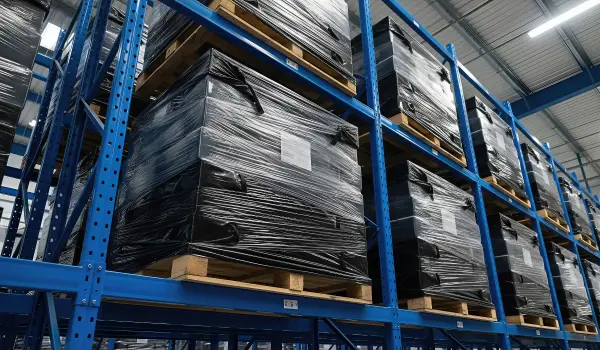
• Warehouses must maintain defined temperature ranges appropriate to the products stored • Humidity levels must be monitored and controlled in areas storing humidity-sensitive products • Direct sunlight must be excluded from storage areas • Storage areas must be clean, dry, well-ventilated, and free from pest contamination • Products must be stored off the floor on pallets, shelving, or racking to prevent moisture damage and facilitate cleaning
Documentation and Traceability
• All products must be traceable through documented receiving, storage, and distribution records • Batch numbers, manufacturing dates, and expiry dates must be recorded and managed • Written standard operating procedures (SOPs) must exist for every critical warehouse activity • Deviations from established procedures must be documented, investigated, and resolved
Staff Training and Competency
• All personnel handling pharmaceutical or health products must receive appropriate training before performing their duties • Training must cover product handling, storage requirements, hygiene standards, and safety procedures • Training records must be maintained and updated regularly
These guidelines form the foundation upon which national regulators — including Health Canada — build their specific compliance requirements.
WHO Good Warehousing Practice: What It Means in Practice
WHO good warehousing practice is a specific framework within the broader WHO guidelines that defines the operational standards required for storing and distributing pharmaceutical and health products safely. It is the warehousing equivalent of Good Manufacturing Practice (GMP) — applied to the storage and distribution stage rather than the production stage.
Key principles of WHO good warehousing practice include:
Qualified Personnel
• A designated responsible person must oversee all warehousing activities • Staff must be trained in relevant SOPs, product handling, and safety protocols • Competency must be assessed and documented — not just assumed
Premises and Equipment
• The warehouse facility must be designed, constructed, and maintained to protect products from contamination, deterioration, and environmental damage • Equipment (racking, forklifts, temperature monitoring systems) must be regularly calibrated and maintained • Separate areas must be designated for receiving, quarantine, approved stock, rejected stock, and returned products • Pest control programs must be implemented and documented
Product Handling and Stock Rotation
• Products must be handled in a manner that prevents damage and contamination • FIFO (first in, first out) or FEFO (first expiry, first out) stock rotation must be enforced • Expired or recalled products must be physically separated and clearly labelled • Product integrity must be verified at receiving and before dispatch
Record Keeping
• Every movement of product — receiving, storage, picking, shipping, returning — must be documented • Records must be retained for a defined period in accordance with national regulations • Records must be readily accessible for regulatory inspection
For businesses evaluating a 3PL warehousing provider for pharmaceutical or health products, adherence to WHO good warehousing practice — as reflected through Health Canada compliance — should be a non-negotiable requirement.
WHO Warehouse Temperature Mapping: Ensuring Consistent Conditions
WHO warehouse temperature mapping is the process of systematically verifying that temperature conditions within a warehouse are uniform, predictable, and maintained within acceptable ranges across the entire storage area.
Temperature mapping is not a one-time exercise. It is a structured validation process that must be conducted:
• Before a facility is commissioned for temperature-sensitive storage • After any structural modification to the warehouse (new walls, doors, loading docks, HVAC changes) • Periodically as part of ongoing qualification — typically annually or as defined by the facility’s quality management system
How Temperature Mapping Works
The mapping process involves placing calibrated temperature sensors (data loggers) at multiple locations throughout the warehouse — including areas near walls, doors, ceilings, floors, HVAC units, and the centre of the storage area. These sensors record temperature data continuously over a defined period (typically 7–14 days), capturing variations across different times of day, weather conditions, and operational activities (door openings, forklift traffic, inventory loading).
The resulting data is analysed to identify:
• Hot spots — Areas that consistently run warmer than the target range • Cold spots — Areas at risk of dropping below minimum thresholds • Temperature uniformity — The degree of variation across the storage zone • HVAC performance — Whether the heating and cooling systems maintain conditions within specification under normal operating loads
Based on the findings, corrective actions are implemented — repositioning air vents, adjusting HVAC settings, restricting product placement in identified risk zones, or installing additional monitoring equipment.
Ongoing Temperature Monitoring
Beyond the initial mapping, compliant warehouses maintain continuous temperature monitoring through:
• Fixed sensors placed at validated locations throughout the facility • Automated logging that records temperatures at defined intervals (typically every 15–30 minutes) • Alert systems that trigger notifications when temperatures deviate from the acceptable range • Documented response procedures for excursions — including product quarantine, impact assessment, and root cause investigation
At Delibrex, temperature-controlled zones within the Edmonton warehouses are subject to this full monitoring framework — ensuring that pharmaceutical products, natural health products, food inventory, and other temperature-sensitive goods are stored within validated conditions at all times.
Health Canada Compliance: What Canadian Warehouses Must Meet
While WHO guidelines provide the international framework, Health Canada sets the specific regulatory requirements for warehousing pharmaceutical products, natural health products (NHPs), medical devices, and related health goods in Canada.
A Health Canada Licensed warehouse must demonstrate compliance with:
Site Licensing Requirements
• The facility must hold a valid Establishment Licence issued by Health Canada • The licence must cover the specific activities performed (storage, distribution, wholesale) • Licence conditions must be maintained continuously — not just at the time of application • Regular inspections by Health Canada auditors must be accommodated
Good Manufacturing Practices (GMP) for Storage and Distribution
Health Canada’s GMP framework — aligned with WHO standards — requires:
• Defined temperature and humidity specifications for each storage area • Validated temperature monitoring systems with documented calibration • Segregated areas for quarantine, approved, rejected, and returned products • SOPs for every critical process: receiving, storage, picking, packing, shipping, returns, recalls, and temperature excursions • A quality management system with documented deviation handling and corrective action procedures
Product-Specific Requirements
| Product Category | Key Health Canada Storage Requirements |
|---|---|
| Prescription pharmaceuticals | Establishment Licence; GMP compliance; full chain-of-custody documentation; temperature monitoring |
| Natural health products (NHPs) | Site Licence; GMP for NHPs; lot tracking; expiry management; complaint handling |
| Medical devices | Establishment Licence for specific device classes; traceability documentation |
| Over-the-counter products | Compliance with applicable monograph or DIN requirements; proper storage conditions |
Delibrex’s Edmonton facilities hold Health Canada licensing that covers the storage and distribution of pharmaceutical and natural health products. This licensing is maintained through ongoing compliance — not a one-time certification — including regular audits, documented SOPs, validated temperature monitoring, and trained personnel.
How Often Should Warehouse Safety Training Be Conducted?
Warehouse safety training is a regulatory requirement in every Canadian province, governed by occupational health and safety legislation. However, the frequency of training depends on the type of training and the specific regulations that apply.
Mandatory Training Frequencies
| Training Type | Recommended Frequency | Regulatory Basis |
|---|---|---|
| General workplace safety orientation | At hire; upon reassignment to new duties | Provincial OH&S legislation |
| WHMIS training | At hire; upon introduction of new hazardous materials; refresher every 1–3 years | Federal WHMIS 2015 / Provincial OH&S |
| Forklift and powered equipment | At hire; refresher every 3 years (or after an incident) | CSA B335 / Provincial OH&S |
| TDG (Transportation of Dangerous Goods) | Every 3 years | TDG Act and Regulations |
| Fire safety and emergency procedures | Annually | Provincial Fire Code / OH&S |
| Product-specific handling (pharma, food, chemical) | At hire; upon process changes; annual refresher | Health Canada GMP / WHO GDP / CFIA |
| First aid | Every 3 years (certificate renewal) | Provincial OH&S |
Best Practices Beyond Minimum Requirements
Compliant warehouses do not simply meet the minimum training frequencies — they exceed them:
• Toolbox talks — Brief safety discussions conducted weekly or daily at shift start, covering recent incidents, seasonal hazards, or refreshers on key procedures • Competency assessments — Practical evaluations (not just classroom sessions) conducted periodically to verify that staff can perform tasks safely and correctly • Incident-triggered retraining — Immediate retraining conducted whenever a safety incident, near-miss, or deviation occurs • New product or process training — Delivered before any change in product handling, equipment, or workflow is implemented
At Delibrex, safety training is treated as a continuous operational discipline — not an annual checkbox. The handling of pharmaceutical products, chemical and dangerous goods, and food inventory under Health Canada, WHMIS, and TDG standards requires a workforce that is current, competent, and documented.
How Often Should Warehouse Floors Be Cleaned?
The question of warehouse floor cleaning frequency may seem operational, but in compliant warehousing, it is a regulatory matter. Floor cleanliness directly affects product safety, pest control, worker safety, and audit outcomes.
Cleaning Frequencies by Warehouse Type
| Warehouse Environment | Recommended Floor Cleaning Frequency |
|---|---|
| General / ambient storage | Sweep daily; scrub or machine-clean weekly |
| Food-grade warehousing | Sweep daily; wet-clean or sanitize daily in active zones; deep clean weekly |
| Pharmaceutical storage | Sweep daily; wet-clean on a documented schedule (daily to weekly depending on activity); deep clean monthly or as defined by SOP |
| Chemical / dangerous goods areas | Clean immediately after any spill; scheduled cleaning per SOP; inspect daily |
| Cold storage / temperature-controlled zones | Clean on documented schedule; special attention to condensation, ice buildup, and drainage |
Why Floor Cleanliness Matters for Compliance
• Health Canada auditors inspect floor conditions as part of facility assessments — visible dirt, debris, or staining raises questions about overall maintenance standards • Pest control programs are compromised when floors are not kept clean — food crumbs, spilled liquids, and debris attract pests that can contaminate stored products • Worker safety is directly affected — dust, spills, and debris create slip, trip, and fall hazards that are the leading cause of warehouse injuries • Product integrity depends on a clean environment — products stored on or near dirty floors risk contamination, particularly in food-grade and pharmaceutical settings
Cleaning schedules must be documented, with records indicating the date, time, area cleaned, cleaning method, and the person responsible. These records are subject to review during regulatory inspections.
Additional Compliance Standards in Canadian Warehousing
Beyond Health Canada and WHO frameworks, compliant warehouses in Canada must also adhere to:
WHMIS (Workplace Hazardous Materials Information System)
• All hazardous materials must be properly labelled with GHS-compliant labels • Safety Data Sheets (SDS) must be accessible for every hazardous product on site • Workers must be trained on hazard identification, labelling, and safe handling procedures
TDG (Transportation of Dangerous Goods)
• Products classified as dangerous goods must be stored, handled, and shipped in accordance with TDG regulations • Packaging, labelling, and documentation requirements must be met for every outbound dangerous goods shipment • Staff involved in handling or preparing dangerous goods shipments must hold valid TDG training certification
CFIA (Canadian Food Inspection Agency) Standards
• Food-grade warehouses must comply with applicable CFIA requirements for temperature control, sanitation, and pest management • Traceability documentation must enable a product to be tracked from receiving through to distribution • Recalls must be executable within defined timeframes
Delibrex’s Edmonton warehouses maintain compliance across all of these frameworks — Health Canada licensing, WHMIS, TDG, and food-grade standards — enabling a single facility to handle pharmaceutical inventory, chemical products, food and beverage goods, and standard commercial inventory simultaneously.
For businesses wanting to understand how these compliance capabilities connect to the broader warehousing services and pricing available in Canada, the service and pricing guide provides detailed information.
Partner with a Compliant Warehouse That Meets the Standard
Temperature-controlled and compliant warehousing is not a feature — it is a requirement for any business handling regulated products in Canada. The standards set by WHO, Health Canada, WHMIS, TDG, and CFIA exist to protect product integrity, worker safety, and public health. Meeting them requires purpose-built infrastructure, trained personnel, validated systems, and ongoing operational discipline.
Delibrex has maintained these standards across two Edmonton warehouses for over 50 years. With Health Canada Licensed pharmaceutical storage, temperature-controlled environments, chemical and dangerous goods capabilities, food-grade warehousing, and a workforce trained to WHO good warehousing practice principles, the compliance infrastructure is not theoretical — it is operational, audited, and proven.
Request a free quote today and discover how Delibrex’s compliant warehousing can protect your products and your business.
Frequently Asked Questions
What are WHO warehouse guidelines?
WHO warehouse guidelines are international standards published by the World Health Organization that define how pharmaceutical, medical, and health-related products should be stored and handled. They cover storage environment requirements, documentation and traceability, staff training, and quality management systems. These guidelines inform national regulations, including Health Canada’s standards.
What is WHO warehouse temperature mapping?
WHO warehouse temperature mapping is the process of placing calibrated sensors throughout a warehouse to verify that temperature conditions are uniform and maintained within specified ranges. Mapping is conducted before commissioning, after structural changes, and periodically thereafter. The data identifies hot and cold spots and validates HVAC performance.
What is WHO good warehousing practice?
WHO good warehousing practice is a framework defining the operational standards for storing and distributing pharmaceutical and health products safely. It covers qualified personnel, facility design, equipment maintenance, product handling, stock rotation, segregation of product statuses, and comprehensive record keeping.
How often should warehouse safety training be conducted?
Frequency varies by training type. General orientation is conducted at hire, WHMIS refreshers every one to three years, forklift certification every three years, TDG training every three years, and fire safety annually. Best practice includes weekly toolbox talks, competency assessments, and incident-triggered retraining.
How often should warehouse floors be cleaned?
General warehouses should be swept daily and machine-cleaned weekly. Food-grade and pharmaceutical areas require daily cleaning with documented schedules. Chemical storage areas require immediate cleaning after spills plus scheduled maintenance. All cleaning activities must be documented for regulatory compliance.
What does Health Canada require for warehouse compliance?
Health Canada requires a valid Establishment Licence, GMP-compliant storage and distribution operations, validated temperature monitoring, segregated storage areas, documented SOPs, quality management systems, trained personnel, and readiness for regular regulatory inspections.