
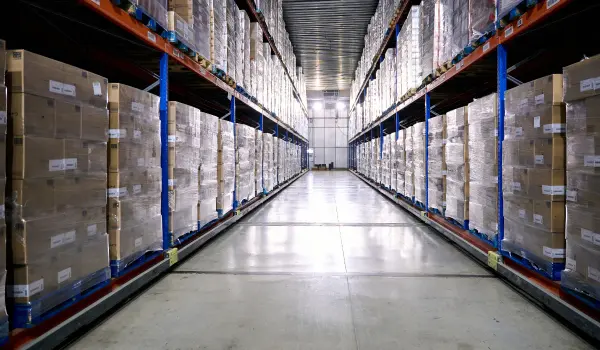
Alberta runs on logistics. Whether the business operates in the oil sands of the north, the irrigated farmlands of the south, the meat-processing corridor of the centre, or the manufacturing hubs around Edmonton and Calgary, warehouse services are the quiet infrastructure that keeps every supply chain moving. Choosing the right third-party logistics (3PL) partner is one of the most consequential operational decisions a growing Alberta business will ever make.
This guide covers everything Alberta businesses need to evaluate when selecting a warehouse partner — what services are actually included, what compliance certifications genuinely matter, how regional geography changes the calculation, and what to ask before signing any contract. For a closer look at Delibrex’s full Alberta network, see the Alberta warehousing hub.
What Are Warehouse Services?
Warehouse services refer to the managed storage, handling, and distribution of inventory on behalf of another business. A 3PL provider receives goods inbound, stores them under appropriate conditions, picks and packs orders, and ships them outbound to customers, retailers, or other facilities. For most growing businesses, this is the most cost-effective alternative to operating a warehouse in-house.
Furthermore, modern warehouse services extend far beyond basic storage. A full-service 3PL also provides inventory technology, compliance documentation, cross-docking, freight forwarding, and value-added services like kitting and labelling.

The Four Core Service Types
Most Alberta 3PL providers organize their offerings around four core service categories. Understanding which combination a business actually needs is the first step in choosing a partner.
| Service Type | What It Includes | Best For |
| Warehousing | Storage (racked, bulk, temperature-controlled), inventory management, real-time portal | Businesses needing managed storage |
| Order Fulfillment | Pick, pack, ship; e-commerce integration; multi-channel fulfillment | Retailers, e-commerce brands |
| Distribution | Cross-docking, freight forwarding, carrier coordination, regional and national delivery | Multi-region distribution networks |
| E-Commerce Fulfillment | Shopify, Amazon, WooCommerce integration; same-day or next-day shipping | Online sellers, DTC operations |
Most Alberta businesses combine two or more of these services. For deeper detail on each, see Delibrex’s pages for warehousing, order fulfillment, distribution services, and e-commerce fulfillment.
Compliance Standards Alberta Businesses Need to Understand
Alberta’s economy is unusual. The province is heavy in energy, agriculture, food processing, and regulated industries — meaning the compliance bar for warehousing is genuinely higher here than in most Canadian markets. Many 3PL providers cannot meet it.
The four compliance frameworks most relevant to Alberta operations are:
- TDG (Transportation of Dangerous Goods) — required for oilfield chemicals, fertilizers, sanitation chemicals, and any regulated hazardous freight
- Health Canada Licensed — required for pharmaceutical, NHP, animal health, and certain regulated consumer goods
- Food-Grade Compliance — aligned with Canadian food safety standards (Safe Food for Canadians regulations)
- WHMIS Personnel Training — staff training for safe handling of regulated workplace materials
Above all, businesses should treat these as a stack — not as individual checkboxes. A genuinely capable Alberta 3PL meets all four standards under one roof.
Edmonton-Based vs. Calgary-Based 3PLs: How to Choose
Alberta has two major 3PL hubs — Edmonton in the north and Calgary in the south. They serve different industries, different geographies, and different supply chain profiles.
| Consideration | Edmonton Hub Strength | Calgary Hub Strength |
| Oil & gas / oil sands supply | Strong (Hwy 63, Hwy 43, Yellowhead) | Limited |
| Agricultural inputs | Strong (TDG networks) | Strong (southern agri-belt) |
| Food processing distribution | Strong (food-grade depth) | Strong |
| E-commerce consumer reach | Moderate | Strong (US border) |
| Northern Alberta service area | Strong (only practical option) | Distant |
| Southern Alberta service area | Practical via QE2 | Closest |
Edmonton-based 3PLs typically have stronger compliance breadth (Health Canada, TDG) and a more industrial client base, while Calgary-based providers often serve consumer e-commerce and U.S. cross-border traffic more efficiently.
Warehouse Services by Alberta Region
Alberta is too geographically large to be treated as a single market. The five operational regions below each have distinct industries, corridors, and compliance demands.
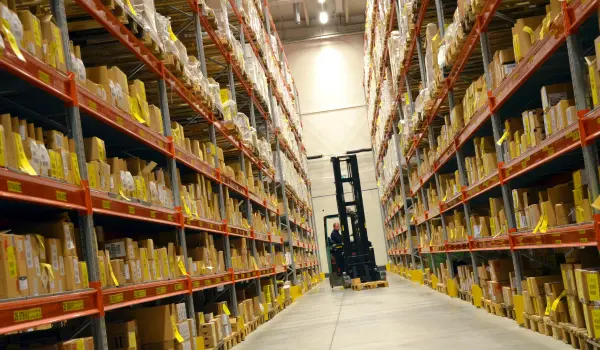
Edmonton Metro
The Edmonton Metropolitan Region is the largest industrial hub in Alberta, anchored by the city itself, the Mill Woods sub-area, and the Leduc-Nisku-YEG airport corridor. Warehouse services in Edmonton serve multi-industry clients. Mill Woods and Leduc offer specialized fits — Mill Woods for SMB and e-commerce, Leduc for managed-3PL alternatives to leasing raw Nisku space.
Central Alberta Corridor
The QE2 connects Edmonton to a string of central Alberta towns with distinct economic profiles. Innisfail hosts a federally inspected meat processing hub. Olds anchors agricultural technology through Olds College. Stettler serves a dual oil & gas and agriculture economy.
Southern Alberta
Southern Alberta hosts some of Canada’s most productive agri-food operations. Lethbridge sits at the centre of Canada’s Premier Food Corridor with 120+ food processors. Brooks is home to one of Canada’s largest beef processing plants. Chestermere, just east of Calgary, often partners with Edmonton-based 3PLs for compliance-driven supply chains.
Northern Alberta & Oil Sands
The north drives much of Alberta’s energy economy. Grande Prairie serves the Montney and Duvernay plays via Highway 43. Fort McMurray anchors the Athabasca oil sands. Both markets demand TDG compliance, Health Canada licensing for camp medical supply, and project-driven volume scale.
East-Central Alberta & Border
East-central Alberta has a distinct supply chain profile. Lloydminster is the Heavy Oil Capital of the World, straddling two provinces. Provost serves the eastern oil and agricultural belt 19 km west of Saskatchewan.
Cost Factors Specific to Alberta Operations
Alberta warehouse costs differ from Toronto or Vancouver due to regulated freight, large geographic distances, and seasonal volume swings.
Key cost factors include:
- Compliance premiums for TDG, Health Canada, food-grade handling
- Corridor transport distance (QE2 vs. Hwy 16 vs. Hwy 63)
- Volume seasonality — harvest cycles and oilfield turnarounds create peaks
- Temperature-controlled vs. ambient storage requirements
- Project-staging needs for industrial clients
Questions to Ask Before Signing With Any Alberta 3PL
- What specific compliance certifications does the facility hold?
- How long has the provider been operating in Alberta?
- Does the provider offer real-time inventory visibility?
- Which carrier relationships are included?
- How does the provider handle volume swings?
- Can the provider scale across multiple Alberta regions?
Choosing the Right Alberta 3PL Partner
The right 3PL partnership in Alberta comes down to three things: a compliance stack that matches the actual industry, a geographic position that fits the supply chain, and a track record long enough to be trusted with regulated freight. Delibrex has operated from two fully equipped Edmonton warehouses since 1974, with Health Canada licensing, TDG compliance, food-grade and temperature-controlled storage, and a 50+ year history serving Alberta industries.
To explore how Delibrex can support a specific Alberta operation, request a free quote today or call 780-455-7200.
Frequently Asked Questions
Common questions about warehouse services in Alberta, answered by a 3PL provider operating in the province since 1974.
What is a 3PL and how is it different from a warehouse?
A 3PL (third-party logistics) provider does more than just store inventory. A 3PL manages the full operational stack including receiving, storage, pick and pack, order fulfillment, carrier dispatch, compliance documentation, and real-time inventory visibility. A traditional warehouse may only offer space to lease. In Alberta, where regulated freight is common, a full-service 3PL is typically the better fit for businesses in energy, agriculture, food processing, and e-commerce.
How much do warehouse services cost in Alberta?
Warehouse costs in Alberta depend on storage volume, product type, required compliance certifications, transport distance, and seasonal volume swings. Basic dry storage in Edmonton metro is typically the lowest cost category. Temperature-controlled, food-grade, or Health Canada licensed storage carries meaningful premiums. The most accurate cost picture comes from a transparent quote that breaks down each component rather than bundling them.
Which is better for an Alberta business: an Edmonton or Calgary 3PL?
It depends on the industry and geography. Edmonton 3PLs typically have stronger compliance breadth (Health Canada, TDG, food-grade) and serve the energy sector, agricultural inputs, and northern Alberta markets more efficiently. Calgary 3PLs serve consumer e-commerce, U.S. cross-border traffic, and southern Alberta markets more efficiently. For regulated freight or multi-region distribution, Edmonton is usually the better choice.
What is Health Canada Licensed warehousing and when is it required?
A Health Canada Licensed facility has been authorized by Health Canada to store and handle regulated products including pharmaceuticals, Natural Health Products (NHPs), animal health products, and certain medical devices. This licence is required for businesses distributing these product categories. In Alberta, Health Canada licensing matters particularly for oil sands camp medical supply, animal health distributors, and pharmacy distribution serving rural and remote communities.
Does Delibrex serve all of Alberta?
Yes. Delibrex operates from two fully equipped Edmonton warehouses and serves clients across Alberta via the QE2, Yellowhead Highway 16, Highway 43, Highway 63, Highway 21, and Highway 13 corridors. This includes Edmonton metro, central Alberta (Innisfail, Olds, Stettler), southern Alberta (Lethbridge, Brooks, Chestermere), northern Alberta (Grande Prairie, Fort McMurray), and east-central Alberta and the Saskatchewan border (Lloydminster, Provost).