
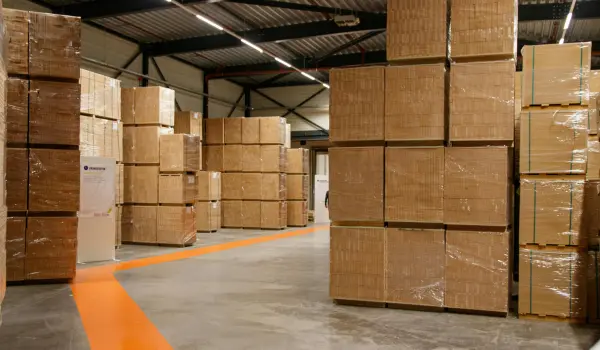
How ecommerce fulfillment works?For many online sellers, ecommerce fulfillment feels like a black box. An order is placed, and a package eventually arrives at the customer’s door. But between those two points, a precise sequence of operations is executed — one that determines whether the delivery arrives on time, in the right condition, and with the correct items inside.
Understanding how ecommerce fulfillment actually works — from the systems that power it to the physical parcel preparation that makes it tangible — is essential for any online business considering a fulfillment partnership or looking to improve its current operations.
This guide walks through the complete ecommerce fulfillment process, explains what happens inside a fulfillment centre on a daily basis, breaks down how an ecommerce fulfillment parcel is prepared, and explores what it takes to start or partner with an ecommerce fulfillment centre in Canada.
The Ecommerce Fulfillment Process: End to End
Every ecommerce fulfillment operation follows a structured workflow. While the details may differ between providers, the fundamental stages remain consistent. Here is how the process works from the moment inventory enters the warehouse to the moment a customer receives their package.
Stage 1: Inventory Inbound and Receiving
Before a single order can be shipped, inventory must arrive at the fulfillment centre and be properly processed. The receiving stage includes:
• Shipment scheduling — Inbound deliveries are coordinated in advance so that dock space, labour, and system capacity are prepared • Unloading and inspection — Products are unloaded from the delivery vehicle and inspected for damage, quantity discrepancies, or labelling issues • SKU verification — Each product is matched against the advance shipping notice (ASN) or purchase order to confirm that the correct items and quantities have arrived • Barcode assignment — If products do not already carry warehouse-compatible barcodes, they are labelled at this stage • System entry — Items are logged into the warehouse management system (WMS) with accurate quantities, lot numbers, and expiry dates where applicable • Putaway — Products are transported to their designated storage locations — bins for small items, shelves for medium products, or pallet racks for bulk inventory
Accuracy during receiving is foundational. A miscount or mislabelled product at this stage cascades into picking errors, inventory discrepancies, and customer complaints throughout the fulfillment lifecycle.
Stage 2: Warehousing and Inventory Management
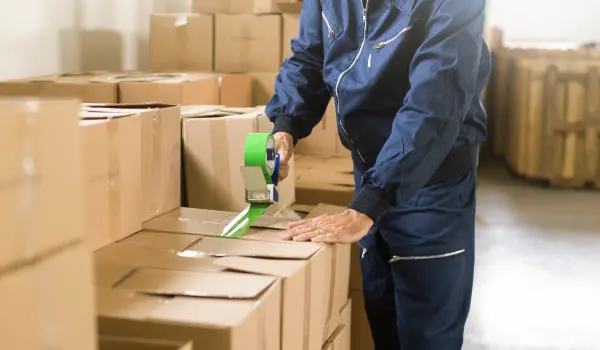
Once inventory is received and stored, the warehousing phase begins. This is not passive storage — it is a continuously managed operation that ensures products remain accessible, accurate, and ready for fulfillment at all times.
Key warehousing activities include:
• Slotting optimization — Products are positioned within the warehouse based on order frequency. Fast-moving SKUs are placed nearest to packing stations, reducing pick travel time and increasing throughput • Real-time inventory tracking — The WMS maintains a live record of every item’s location, quantity, and status. As products are received, picked, shipped, or returned, the system updates instantly • Stock rotation — FIFO (first in, first out) or FEFO (first expiry, first out) protocols are applied to prevent product expiration and ensure the oldest inventory ships first • Cycle counting — Rather than shutting down operations for a full physical inventory count, cycle counts audit small sections of inventory on a rolling schedule to maintain accuracy without disruption • Replenishment — When pick locations run low, staff replenish them from bulk storage areas to ensure orders can be fulfilled without delay • Client reporting — Inventory dashboards and portal access provide online sellers with full visibility into their stock levels, inbound shipments, and order history at all times
For businesses selling products with specialized storage requirements — such as temperature-sensitive health products, food and beverage items, or regulated pharmaceutical inventory — the warehousing infrastructure must support those needs. Delibrex’s Edmonton facilities include temperature-controlled zones, food-grade storage areas, and a Health Canada Licensed environment for pharmaceutical and natural health product handling.
Stage 3: Order Capture and Processing
The fulfillment engine activates the moment a customer clicks “buy.” Here is what happens behind the scenes:
• Automatic order transmission — Through the integration between the seller’s ecommerce platform (Shopify, Amazon, WooCommerce, or others) and the fulfillment centre’s WMS, order details are transmitted instantly. No manual entry is required. • Order validation — The system checks that all ordered items are in stock and available for picking. If an item is unavailable, the seller is notified immediately. • Priority assignment — Orders are queued based on shipping service level (standard, expedited, express), daily carrier cutoff times, and any special handling instructions provided by the seller • Pick list generation — A digital or printed pick list is created, specifying exactly which items to retrieve, their quantities, and their precise locations within the warehouse
This automation is one of the most significant operational advantages of working with a professional fulfillment centre. An order placed on Shopify at 9:00 a.m. can be in the picking queue by 9:01 a.m. — with zero intervention from the seller.
For sellers wanting to understand how this process fits into the broader logistics framework, the guide on how third party logistics works provides the full operational context.
Stage 4: Picking
Picking is the physical act of retrieving ordered items from their warehouse locations. It is one of the most labour-intensive — and accuracy-critical — stages in the fulfillment process.
Professional fulfillment centres use structured picking methods to maximize efficiency:
| Picking Method | How It Works | Best For |
|---|---|---|
| Single-order picking | One order is picked at a time, start to finish | Low-volume or complex multi-item orders |
| Batch picking | Multiple orders are picked simultaneously in a single warehouse pass | High-volume periods with overlapping SKUs |
| Zone picking | The warehouse is divided into zones, with dedicated pickers assigned to each area | Large facilities with diverse product ranges |
| Wave picking | Orders are grouped and released in scheduled waves aligned to carrier cutoff times | Operations balancing throughput with shipping deadlines |
Regardless of the method used, barcode scanning is employed at every pick point. The picker scans the item and the system confirms that the correct product and quantity have been retrieved. This single quality gate reduces mispick rates to fractions of a percent — a critical standard for maintaining customer satisfaction at scale.
Stage 5: Packing
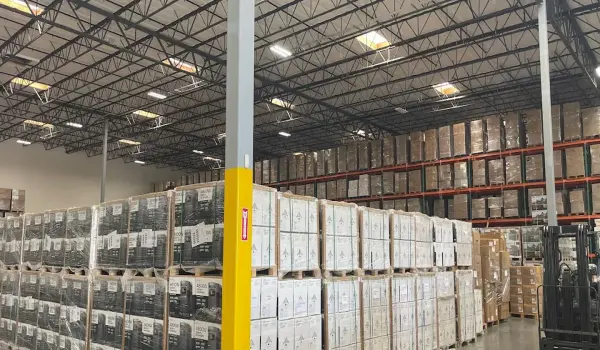
Once items are picked, they move to the packing station — where the order is transformed from a collection of products into a ready-to-ship parcel.
The packing process involves:
• Order verification — A final check confirms that the correct items and quantities are present before packing begins • Packaging selection — The appropriate packaging type is chosen based on item size, weight, and fragility. Options include corrugated boxes, poly mailers, padded envelopes, and rigid mailers • Protective materials — Bubble wrap, air pillows, tissue paper, foam inserts, or void fill are added to prevent movement and damage during transit • Branded packaging (optional) — For sellers requesting a premium unboxing experience, custom boxes, branded tissue, thank-you cards, promotional inserts, or custom tape are included at this stage • Documentation — Packing slips, invoices, regulatory documents, or customs declarations (for cross-border orders) are enclosed as required • Sealing — The package is sealed securely and weighed for shipping label accuracy
Efficient packing balances two competing priorities: protecting the product and minimizing package size. Carriers charge based on dimensional weight — meaning an oversized box for a small item increases shipping costs unnecessarily. Experienced fulfillment teams are trained to select the smallest appropriate packaging without compromising product safety.
Stage 6: Labelling and Carrier Assignment
With the package sealed, the shipping label is generated:
• Carrier selection — The WMS evaluates the package’s destination, dimensions, weight, and the seller’s preferred service level, then selects the optimal carrier from the available network • Rate shopping — Across Delibrex’s partnerships with Canada Post, FedEx, UPS, and Purolator, the system identifies the most cost-effective option that meets the delivery timeline • Label generation — A shipping label is printed and applied to the package • Tracking creation — A tracking number is generated and pushed back to the seller’s platform — and, in most cases, directly to the end customer via email or SMS
Stage 7: Shipping and Carrier Handoff
Labelled packages are consolidated in carrier-specific staging areas within the warehouse. Carriers conduct scheduled pickups — typically daily — and packages enter the transportation network for distribution and delivery.
For Canadian ecommerce shipments, delivery timelines typically break down as follows:
| Destination | Typical Ground Delivery |
|---|---|
| Within Alberta (from Edmonton) | 1–2 business days |
| British Columbia and Saskatchewan | 2–3 business days |
| Ontario and Quebec | 3–5 business days |
| Atlantic provinces | 4–6 business days |
| Northern territories | 5–8 business days |
These timelines reflect standard ground service. Expedited and express options reduce delivery times significantly — at correspondingly higher rates.
Stage 8: Returns Processing
The fulfillment cycle does not end at delivery. Returns are an operational reality in ecommerce — accounting for 20–30% of all online orders. A professional fulfillment centre handles returns through a structured reverse logistics process:
• Return receipt — The returned package arrives at the warehouse and is logged into the system • Order matching — The return is linked to the original order for tracking and reporting • Inspection — The item is examined for damage, defects, completeness, and resale eligibility • Disposition — Based on the seller’s return policy, the item is restocked, quarantined, donated, or disposed of • Inventory update — The WMS is updated to reflect the returned item’s status and location • Seller notification — A return report is provided detailing the item’s condition and the disposition action taken
What Is an Ecommerce Fulfillment Parcel?
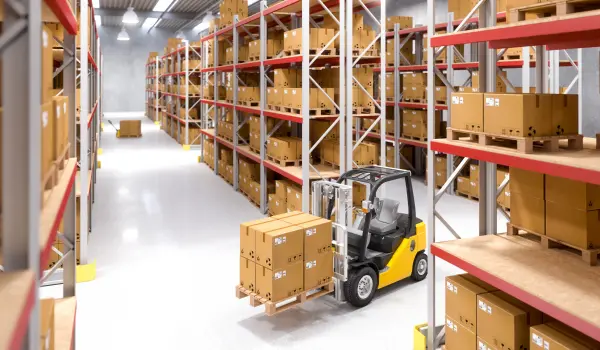
An ecommerce fulfillment parcel is the individual package that is prepared and shipped to the end customer as the result of an online order. It is the physical output of the entire fulfillment process — the tangible product of receiving, storage, picking, packing, and labelling.
Each fulfillment parcel typically contains:
• The ordered product(s) — Verified and inspected for accuracy and condition • Protective packaging — Materials selected to prevent damage during transit • Packing slip or invoice — A document confirming order contents, quantities, and pricing • Branded elements (if applicable) — Custom boxes, tissue, inserts, or thank-you cards • Shipping label — Carrier-specific label with destination address, barcode, and tracking number • Customs documentation (if cross-border) — Required declarations for international shipments
The parcel is the final touchpoint between the fulfillment operation and the customer. Its condition upon arrival — the packaging quality, the accuracy of contents, and the overall presentation — directly shapes the customer’s perception of the brand. Research consistently shows that 84% of consumers say the unboxing experience influences their likelihood to recommend the brand and purchase again.
This is why professional fulfillment centres treat parcel preparation as a quality-critical process, not a mechanical task. Every parcel that leaves the warehouse represents the seller’s brand.
How to Start an Ecommerce Fulfillment Centre (Or Partner with One)
For businesses exploring their fulfillment options, two distinct paths are available: building an in-house fulfillment centre or partnering with an established 3PL provider. The right choice depends on scale, resources, and long-term objectives.
Option 1: Starting Your Own Fulfillment Centre
Building an in-house fulfillment operation requires significant investment and expertise:
| Requirement | What Is Involved |
|---|---|
| Warehouse space | Leasing or purchasing a commercial facility with adequate square footage, dock access, and zoning compliance |
| Equipment | Shelving, pallet racking, packing stations, forklifts, barcode scanners, label printers, and packaging materials |
| Technology | A warehouse management system (WMS) with ecommerce platform integration, inventory tracking, and shipping label generation |
| Staffing | Hiring and training receiving, picking, packing, and shipping personnel — with the ability to scale during peak periods |
| Carrier accounts | Establishing direct accounts with Canada Post, FedEx, UPS, and Purolator — typically at individual business rates (higher than volume-negotiated 3PL rates) |
| Compliance | Obtaining any necessary licences or certifications for regulated product categories (Health Canada, WHMIS, food safety) |
| Ongoing management | Daily operational oversight, quality control, inventory audits, carrier management, and continuous process improvement |
This path makes sense for very high-volume operations (typically 10,000+ orders per month) with unique handling requirements that no external provider can accommodate — or for businesses where logistics is a core competitive differentiator.
Option 2: Partnering with an Established Fulfillment Centre
For the majority of Canadian ecommerce businesses, partnering with a 3PL fulfillment provider is the faster, more cost-effective, and lower-risk path. The benefits include:
• No capital investment — Warehouse space, equipment, technology, and staffing are all included in the service • Volume-negotiated shipping rates — Established providers like Delibrex ship thousands of parcels monthly, securing carrier rates that individual businesses cannot match • Immediate scalability — Capacity expands and contracts with demand, without lease renegotiations or hiring cycles • Built-in compliance — For regulated products, the provider’s existing certifications (Health Canada licensing, WHMIS, food-grade handling) eliminate the need to build compliance infrastructure from scratch • Operational expertise — Decades of fulfillment experience translate into higher accuracy rates, faster processing times, and fewer costly errors
The onboarding process with most 3PL providers follows a predictable sequence:
- Requirements discussion — Product types, order volumes, platform integrations, and special handling needs are reviewed
- Custom proposal — Storage allocation, fulfillment workflows, and pricing are tailored to the business
- System integration — The seller’s Shopify, Amazon, WooCommerce, or other platform is connected to the provider’s WMS
- Inventory transfer — Products are shipped to the fulfillment centre, received, and catalogued
- Go live — Orders begin flowing through the fulfillment pipeline with real-time tracking and reporting
For a detailed look at typical costs associated with each approach, the 3PL pricing guide provides a comprehensive breakdown.
Inside a Canadian Ecommerce Fulfillment Centre: What Powers the Operation
Behind the step-by-step process described above, several operational systems work together to make ecommerce fulfillment reliable at scale.
The Warehouse Management System (WMS)
The WMS is the central nervous system of every fulfillment centre. It coordinates:
• Inventory positions across thousands of storage locations • Order routing and priority management based on service levels and cutoff times • Pick path optimization to reduce warehouse travel distance • Carrier rate shopping across multiple shipping partners • Real-time dashboards and reporting for sellers
Without a robust WMS, fulfillment operations quickly become error-prone and inefficient — particularly as SKU counts and order volumes increase.
Quality Control Checkpoints
Professional fulfillment centres embed quality checks at multiple stages:
• Receiving — Products are inspected and counted against purchase orders • Picking — Barcode scanning verifies item and quantity accuracy • Packing — A final order audit confirms completeness before the parcel is sealed • Shipping — Label verification ensures the correct carrier, service level, and destination
These layered checkpoints are what enable established fulfillment operations to maintain order accuracy rates above 99.5%.
Client Visibility and Reporting
Transparency is a defining characteristic of a professional fulfillment partner. Sellers should have access to:
• Real-time inventory levels across all SKUs • Order status tracking from processing through delivery • Shipment and tracking information pushed to customers automatically • Returns and disposition reporting • Performance analytics including accuracy rates, processing speed, and shipping costs
Delibrex provides all of this through its client portal — ensuring that ecommerce sellers maintain full operational visibility without needing to manage the warehouse directly.
Let the Fulfillment Experts Handle the Operations
Ecommerce fulfillment is a precision operation. Every stage — from receiving and storage to picking, packing, labelling, shipping, and returns — must be executed accurately and efficiently to deliver the customer experience that online shoppers expect.
For growing Canadian ecommerce brands, partnering with an experienced fulfillment centre transforms logistics from a bottleneck into a competitive advantage. Products are stored securely. Orders are processed accurately. Parcels are delivered on time. And the business is free to focus on building the brand.
Delibrex has been powering Canadian logistics operations for over 50 years. With two Edmonton warehouses, automated platform integrations, Health Canada Licensed facilities, and a multi-carrier shipping network covering every corner of the country, the operational infrastructure is proven and ready.
Request a free quote today and see how Delibrex’s ecommerce fulfillment operations can support your growth.
Frequently Asked Questions
What is an ecommerce fulfillment parcel?
An ecommerce fulfillment parcel is the individual package prepared and shipped to a customer as the result of an online order. It contains the ordered products, protective packaging, a packing slip, the shipping label, and any branded materials or documentation. The parcel is the final output of the entire fulfillment process.
How does the ecommerce fulfillment process work?
The process begins when a customer places an online order, which is automatically transmitted to the fulfillment centre. Warehouse staff pick the items, pack them securely, generate a shipping label, and hand the parcel to a carrier for delivery. Returns are processed through a structured reverse logistics workflow.
How do I start an ecommerce fulfillment centre?
Starting an in-house fulfillment centre requires warehouse space, shelving and equipment, a warehouse management system, trained staff, carrier accounts, and any necessary regulatory certifications. For most businesses, partnering with an established 3PL provider is a faster and more cost-effective alternative.
What technology is used in ecommerce fulfillment?
Fulfillment centres rely on warehouse management systems for inventory tracking and order routing, barcode scanners for pick accuracy, ecommerce platform integrations for automatic order capture, carrier rate-shopping software for shipping optimization, and client portals for real-time reporting.
What is the difference between self-fulfillment and using a 3PL?
Self-fulfillment requires the business to manage its own warehouse, staff, equipment, technology, and carrier relationships. A 3PL provider handles all of these functions as a service, offering volume-negotiated shipping rates, established infrastructure, and the scalability to handle demand fluctuations without capital investment.