
One of the most common questions asked before partnering with a third party logistics provider is simple: how much is it going to cost?
The honest answer is that How Much Does Third Party Logistics Cost? is rarely one-size-fits-all. Costs are shaped by factors like inventory volume, order frequency, product type, shipping destinations, and the level of service required. A small e-commerce brand shipping 200 orders per month will see a very different cost structure than a manufacturer distributing pallets of regulated goods across Western Canada.
That said, 3PL pricing does not have to be a mystery. In this guide, the most common pricing models used by third party logistics providers in Canada are broken down, typical fee ranges are outlined, and the factors that influence total cost are explained — so that informed decisions can be made before a single dollar is committed.
The Main Components of 3PL Pricing
Third party logistics costs are typically broken into several distinct categories. Each represents a different stage of the supply chain, and most 3PL providers charge separately for each.
1. Onboarding and Setup Fees
When a new 3PL partnership is established, an initial setup process is required. This may include:
• Account configuration and system integration (Shopify, WooCommerce, Amazon, ERP systems) • Warehouse space allocation and shelving setup • Inventory receiving protocols and SKU cataloguing • Custom workflow design for unique product handling requirements
Typical range: $150 – $750+ (one-time fee, varies by complexity)
Some providers waive setup fees for long-term commitments or high-volume accounts. Others include onboarding in the monthly service agreement. It is always worth asking what is — and is not — included.
2. Inventory Receiving Fees
Every time new inventory arrives at the 3PL warehouse, it must be unloaded, inspected, counted, and entered into the inventory management system. Receiving fees are typically charged in one of two ways:
• Per unit — A flat rate for each individual item received • Per pallet or container — A flat rate for each pallet, skid, or shipping container processed
Typical range: | Receiving Method | Estimated Cost | |—|—| | Per unit (individual items) | $0.20 – $0.75 per unit | | Per pallet | $5 – $25 per pallet | | Per container (full truckload) | $200 – $500+ per container |
Costs increase when additional handling is required — such as quality inspection, labelling, kitting, or barcode verification.
3. Warehousing and Storage Fees
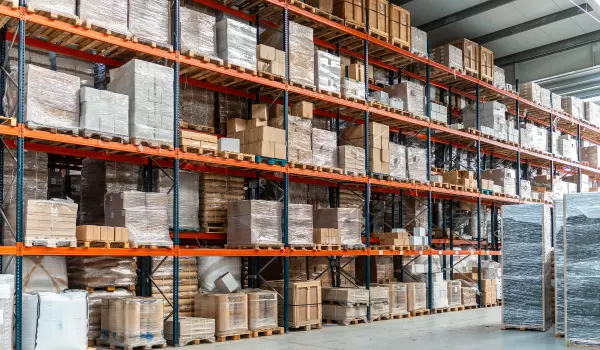
Storage is one of the most significant ongoing costs in third party logistics. Fees are determined by how much space inventory occupies and are typically calculated using one of these models:
• Per pallet per month — The most common method for B2B and bulk inventory • Per cubic foot per month — Used for irregularly sized or smaller products • Per bin or shelf location — Common for e-commerce SKUs stored in pick bins
Typical range: | Storage Method | Estimated Monthly Cost | |—|—| | Per pallet | $10 – $40 per pallet/month | | Per cubic foot | $0.45 – $1.00 per cubic foot/month | | Per bin/shelf | $3 – $10 per bin/month |
Several factors can push storage costs higher:
• Temperature-controlled storage — Required for perishable, pharmaceutical, or sensitive products. Premium rates apply due to the energy and infrastructure involved. • Hazardous materials storage — Chemical and dangerous goods require specialized facilities compliant with WHMIS and TDG regulations. These carry additional handling surcharges. • Seasonal volume spikes — Some providers charge peak storage premiums during high-demand periods (Q4 holiday season, for example).
Delibrex operates two fully equipped warehouses in Edmonton, Alberta, with capabilities that include temperature-controlled environments, Health Canada Licensed pharmaceutical storage, chemical and dangerous goods handling, and food-grade warehousing — all under one operational umbrella.
4. Order Fulfilment Fees (Pick, Pack, and Ship)
Fulfilment fees represent the cost of processing each individual order. When a customer places an order, the fulfilment process involves locating the product, picking it from the shelf, packing it securely, and preparing it for carrier pickup.
Pricing is typically structured as:
• Pick fee — A base charge per order, plus an additional fee per item beyond the first • Packing fee — May be included in the pick fee or charged separately for custom packaging • Packaging materials — Boxes, mailers, bubble wrap, tape, and branded inserts
Typical range: | Fulfilment Component | Estimated Cost | |—|—| | Base pick fee (first item) | $1.50 – $4.00 per order | | Additional item pick fee | $0.25 – $0.75 per item | | Standard packing | Often included in pick fee | | Custom/branded packaging | $0.50 – $3.00+ per order | | Packaging materials | $0.50 – $2.50 per order |
For a deeper breakdown of what fulfilment services include and what they typically cost across Canada, the guide on order fulfilment services in Canada provides a detailed overview.
5. Shipping and Freight Costs
Shipping is often the largest single line item in 3PL pricing. The actual cost depends on:
• Package dimensions and weight — Carriers use dimensional weight pricing, meaning both size and weight affect the rate • Shipping destination — Domestic zones, rural surcharges, and provincial distances all influence cost • Service level — Standard ground, expedited, express, or next-day options carry different rate tiers • Carrier selection — Rates vary between Canada Post, FedEx, UPS, and Purolator
One of the key advantages of partnering with an established 3PL provider is access to volume-negotiated carrier rates. Because providers like Delibrex ship thousands of packages monthly across their entire client base, the per-package rates secured are significantly lower than what individual businesses could negotiate independently.
Typical range: Highly variable. A standard domestic parcel within Alberta may cost $6 – $12, while cross-country shipping to Eastern Canada may range from $15 – $35+. B2B freight shipments are quoted on a per-load basis.
6. Returns Processing Fees
For e-commerce businesses especially, returns management is an unavoidable cost. When returned items arrive at the warehouse, they must be received, inspected, and either restocked or disposed of.
Typical range: $2.00 – $6.00 per return (varies by inspection complexity and restocking requirements)
7. Value-Added Services
Many 3PL providers offer additional services beyond core storage and fulfilment. These are typically priced as add-ons:
• Kitting and assembly — Bundling multiple products into a single package or kit • Labelling and relabelling — Applying barcodes, regulatory labels, or promotional stickers • Gift wrapping and inserts — Seasonal or promotional packaging enhancements • Inventory photography — Product images taken at the warehouse for e-commerce listings
Pricing for value-added services is highly customized and is usually discussed during the quoting process.
What Factors Influence Total 3PL Cost?
Beyond the individual fee categories, several broader factors determine the overall cost of a third party logistics partnership:
Order Volume
Higher order volumes typically result in lower per-unit costs. Most 3PL providers offer tiered pricing that rewards scale — the more orders shipped monthly, the lower the per-order fulfilment rate.
Product Characteristics
Products that are oversized, fragile, temperature-sensitive, hazardous, or require special handling will always cost more to store and ship than standard shelf-stable goods. Pharmaceutical products stored in a Health Canada Licensed facility, for example, carry a premium that reflects the compliance infrastructure required.
SKU Complexity
Businesses with hundreds or thousands of individual SKUs require more warehouse space, more complex picking workflows, and more sophisticated inventory management — all of which increase operational costs.
Shipping Destinations
Fulfilling orders within Alberta costs significantly less than shipping coast-to-coast. Businesses with a customer base concentrated in Western Canada benefit considerably from partnering with an Edmonton-based provider like Delibrex, where proximity to the end customer reduces both transit time and freight expense.
Contract Length and Commitment
Longer-term agreements often unlock better rates. Some providers offer discounted storage or reduced setup fees in exchange for a 12-month or multi-year commitment.
3PL Cost vs. In-House Fulfilment: A Realistic Comparison
A common concern is whether outsourcing to a 3PL provider is actually more affordable than managing logistics internally. The comparison must account for all costs — not just the obvious ones.
| Cost Category | In-House | 3PL Provider |
|---|---|---|
| Warehouse lease | $5,000 – $20,000+/month | Included in storage fees |
| Warehouse staff | $3,500 – $5,000+/month per employee | Included in fulfilment fees |
| Warehouse equipment | $10,000 – $50,000+ (forklifts, shelving, packing stations) | Included |
| Inventory management software | $200 – $1,000+/month | Included (client portal access) |
| Shipping rate negotiation | Individual business rates (higher) | Volume-negotiated rates (lower) |
| Insurance and compliance | Variable (significant for regulated goods) | Managed by the 3PL provider |
| Scalability | Requires new lease, staff, equipment | Scales on demand |
For many Canadian businesses — particularly those shipping between 100 and 10,000+ orders per month — the total cost of a 3PL partnership is lower than the combined overhead of operating an in-house fulfilment operation. More importantly, the time and energy freed up can be redirected toward revenue-generating activities.
How to Open a Third Party Logistics Partnership
For businesses ready to explore 3PL, the process of getting started is more straightforward than many expect. Here is what a typical path looks like:
- Define your requirements — Identify current order volumes, SKU count, product types, storage needs, and shipping destinations
- Request quotes from multiple providers — Compare pricing structures, included services, and contract terms
- Evaluate compliance and capabilities — Verify that the provider can handle any specialized needs (regulated products, temperature control, dangerous goods)
- Review technology integration — Ensure compatibility with your e-commerce platform or order management system
- Start with a pilot period — Many businesses begin with a trial phase to evaluate service quality before committing fully
- Scale as needed — A strong 3PL relationship grows with the business, adjusting capacity and services as demand evolves
The most important step is requesting a detailed, transparent quote that breaks down every fee category. Vague or bundled pricing should be treated as a red flag.
Get a Transparent 3PL Quote
Understanding how much third party logistics costs is the first step toward making a confident, informed decision. The right 3PL provider will offer complete pricing transparency — no hidden fees, no surprise surcharges, and no vague estimates.
Delibrex has been providing trusted, scalable logistics solutions to Canadian businesses for over 50 years. With two Edmonton warehouses, Health Canada licensing, dangerous goods capabilities, and a carrier network that covers the entire country, every element of the supply chain is handled with proven expertise.
Request a free custom quote today and find out exactly what a 3PL partnership would cost for your business.