
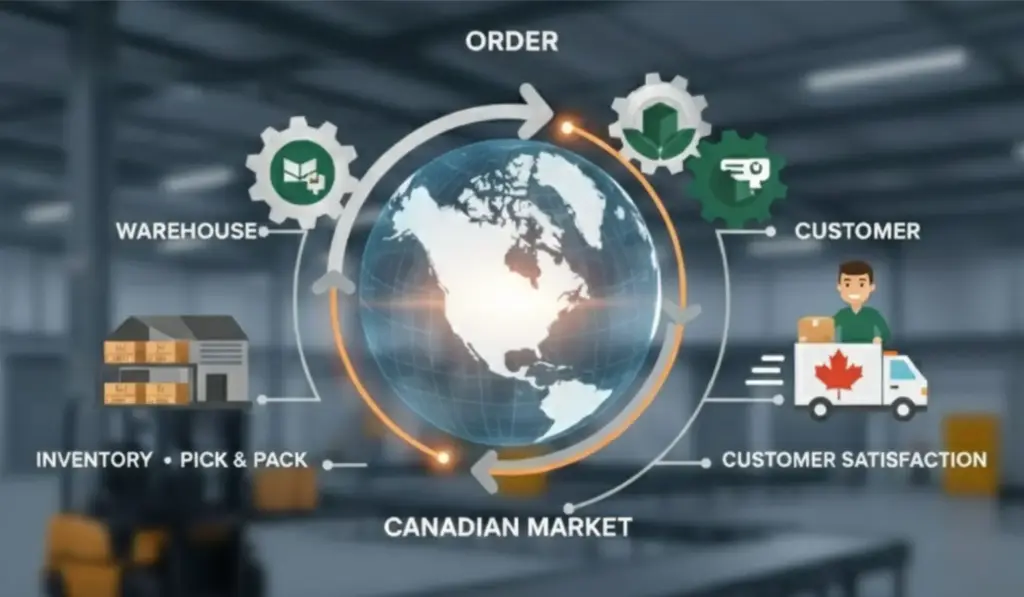
Order fulfillment is often treated as a back-office function. It happens in the warehouse, out of sight from the customer, and is rarely celebrated when it goes right. However, when it goes wrong, the consequences are felt immediately. Delayed deliveries, incorrect shipments, and inventory errors directly affect customer satisfaction, operational costs, and business growth.
In this article, everything Canadian businesses need to know about why order fulfillment is important is covered. Its role in the supply chain is explained, the connection between fulfillment and order management is explored, the best-suited systems are compared, and realistic timelines for Canadian fulfillment operations are outlined.
This guide has been written with the Canadian market in mind. Whether your business is based in Alberta, British Columbia, Saskatchewan, or elsewhere in Western Canada, the information here is relevant and actionable. Delibrex has been supporting businesses in this region from its Edmonton warehouses since 1974, and that experience informs every section of this article.
Why Order Fulfillment Is Important
The importance of order fulfillment extends far beyond simply shipping packages. It is a core operational function that influences every area of a business. Below, the five most significant reasons are outlined.
1. It Is the Final Promise to the Customer
Every purchase represents a commitment. A customer places their trust in a business, parts with their money, and expects to receive the right product in good condition, on time. Order fulfillment is the process by which that commitment is either kept or broken.
When fulfillment is carried out accurately and efficiently, customer expectations are met. Repeat purchases become more likely. Positive reviews are generated. Brand loyalty is built over time. Conversely, when fulfillment fails, even a single experience can result in a lost customer and a damaging review.
In Canada’s growing e-commerce market, where customers have access to a wide range of suppliers, delivery reliability has become one of the most important competitive factors.
2. It Has a Direct Impact on Revenue
Order fulfillment errors are expensive. Mispicked items must be reshipped. Damaged goods generate refund requests. Inventory discrepancies lead to overselling or stockouts. Each of these issues carries a direct financial cost.
Furthermore, poor fulfillment performance leads to a higher rate of customer churn, which means that marketing budgets must work harder to replace lost customers. The cost of acquiring a new customer is significantly higher than the cost of retaining an existing one.
By contrast, a high-performing fulfillment operation reduces error rates, lowers return rates, and supports higher customer lifetime value.
3. It Is Central to Customer Experience and Retention
In modern commerce, the delivery experience is part of the product. Customers notice whether their order is accurate, whether it arrives on time, and whether the packaging is appropriate for the items ordered.
A seamless fulfillment experience reinforces confidence in the brand. An excellent post-purchase experience also creates opportunities for businesses to include inserts, samples, or personalized notes that deepen the relationship with the customer.
4. It Determines Operational Scalability
A business that relies on manual, in-house fulfillment processes will eventually reach a point where those processes cannot keep up with demand. Order volumes increase, warehouse space becomes limited, and staff are stretched.
A well-structured fulfillment operation, particularly one managed by an experienced 3PL provider, is designed to scale. Additional capacity is made available as needed, without the capital investment required to expand an in-house operation.
Delibrex has supported businesses through periods of rapid growth for over 50 years. The infrastructure across two Edmonton warehouses is designed to accommodate clients at every stage, from emerging brands to established distributors.
5. It Supports Compliance in Regulated Industries
In certain product categories, fulfillment is not just an operational concern but a regulatory one. Pharmaceutical products, natural health items, food-grade goods, and other regulated categories are subject to strict handling, storage, and shipping requirements under Canadian law.
Health Canada licensing is required for businesses that store or handle regulated products. Not all 3PL providers hold this credential. Delibrex is Health Canada licensed, which means that clients in the pharmaceutical, nutraceutical, and regulated food sectors can be served in full compliance with applicable standards.
Is Order Fulfillment Part of the Supply Chain?
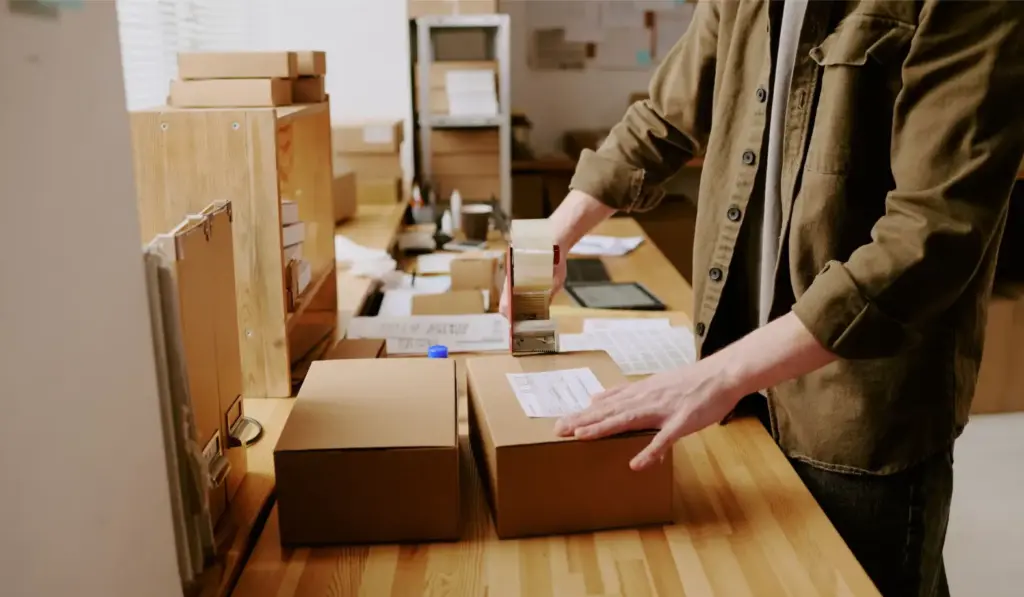
Yes. Order fulfillment is an integral part of the supply chain. Specifically, it sits within the outbound logistics stage, which refers to the movement of finished goods from a storage location to the end customer.
To understand where order fulfillment fits, it is helpful to consider the full supply chain from beginning to end.
| Supply Chain Stage | What It Involves | Role of Order Fulfillment |
| Procurement | Sourcing and purchasing raw materials or finished goods from suppliers | Not directly involved, but inbound inventory depends on procurement outcomes |
| Manufacturing / Production | Converting raw materials into finished products | Not directly involved at this stage |
| Inbound Logistics | Transporting finished or near-finished goods from the manufacturer to the warehouse | Fulfillment begins at the receiving dock when inbound shipments arrive |
| Warehousing and Storage | Storing inventory in an organized manner until it is needed | A core function of the fulfillment operation |
| Order Processing | Receiving, verifying, and preparing customer orders for dispatch | A central fulfillment function |
| Outbound Logistics | Picking, packing, and shipping orders to the customer | The primary operational stage of order fulfillment |
| Returns and Reverse Logistics | Managing returned goods and restocking or disposing of them appropriately | Returns processing is the final stage of the fulfillment cycle |
As the table above illustrates, order fulfillment is not a single step in the supply chain. Rather, it spans multiple stages, beginning when inventory is received at the warehouse and concluding when the customer’s order is delivered and any returns are processed.
In short, fulfillment is the operational engine that drives the customer-facing end of the supply chain.
Is Order Fulfillment the Same as Logistics?
Order fulfillment and logistics are closely related, but they are not exactly the same thing. Understanding the distinction is useful for businesses making decisions about outsourcing and operations.
| Term | What It Covers | Scope |
| Logistics | The broader planning, implementation, and control of the movement and storage of goods across the entire supply chain | Covers both inbound and outbound movement, including procurement, transportation, warehousing, and distribution |
| Order Fulfillment | The specific process of receiving, picking, packing, and shipping individual customer orders | Focused on outbound operations from a warehouse or fulfillment centre to the end customer |
In practical terms, a 3PL provider like Delibrex provides both. Logistics services include the broader coordination of inbound and outbound freight, carrier management, and distribution across Western Canada. Order fulfillment refers specifically to the picking, packing, and shipping of individual client orders from Delibrex’s Edmonton warehouses.
What Is Order Management and Why Is It Important?
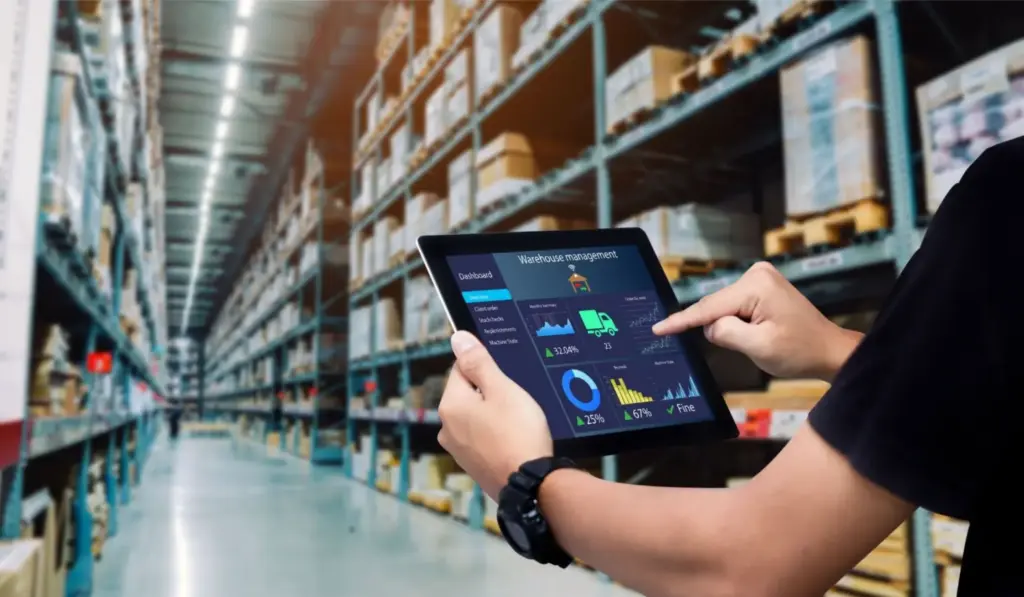
Order management is the process of tracking and coordinating customer orders across all sales channels, from the moment an order is placed through to delivery and any post-sale activity such as returns or exchanges.
While order fulfillment is the physical execution of an order in the warehouse, order management is the broader operational and administrative layer that surrounds it. Together, the two functions must work seamlessly for a business to fulfill orders efficiently.
What Does Order Management Include?
Order management covers a wide range of functions. The following activities are typically included.
- Order receipt and confirmation across multiple sales channels such as e-commerce platforms, phone, and wholesale portals
- Inventory availability checks to confirm that ordered items are in stock before confirming the order
- Order routing to the appropriate warehouse or fulfillment location based on proximity to the customer or stock availability
- Status tracking and communication, including real-time updates sent to the customer
- Exception handling for cases where items are out of stock, addresses are undeliverable, or payment issues are identified
- Returns and exchange management once the order has been delivered
Why Is Order Management Important?
Effective order management is important for the following reasons.
- Accuracy: Orders that are correctly routed, verified, and tracked are significantly less likely to result in errors at the fulfillment stage.
- Visibility: Businesses and their customers both benefit from real-time order tracking. This visibility reduces inbound enquiries and builds trust.
- Efficiency: Automated order management reduces the time and manual effort required to process each order, allowing teams to focus on higher-value activities.
- Customer satisfaction: Customers who receive timely and accurate updates about their orders report higher satisfaction levels and are more likely to return.
- Scalability: A strong order management process accommodates growth. As order volumes increase, a well-configured system handles the load without requiring proportional increases in staffing.
What Is an Order Management System?
An order management system, commonly referred to as an OMS, is a software platform that centralizes and automates the tracking, processing, and coordination of customer orders across multiple channels and locations.
An OMS acts as the operational hub between a business’s sales channels, inventory, warehousing operations, and customers. It ensures that orders are received accurately, inventory is updated in real time, and fulfillment instructions are passed efficiently to the warehouse team.
Which Order Management System Is Best for Canadian Businesses?
The right order management system depends on the size and complexity of the business, the number of sales channels in use, and the level of integration required with warehouse and carrier systems. Several platforms are widely used by Canadian businesses. The most common are compared below.
| OMS Platform | Best For | Key Strengths | Considerations for Canada |
| Shopify | E-commerce brands selling directly to consumers | Easy to use, strong ecosystem of apps, built-in order tracking | Widely used in Canada; supports CAD pricing and Canada Post integration |
| WooCommerce | WordPress-based e-commerce stores | Highly customizable, open source, large plugin library | Requires technical setup; supports Canadian carriers with plugins |
| NetSuite | Mid-to-large businesses with complex operations | Full ERP capabilities, robust reporting, multi-channel support | Powerful but requires significant implementation investment |
| Cin7 | Businesses with both retail and wholesale channels | Multi-channel inventory management, purchase order automation | Strong for businesses managing multiple sales channels |
| Linnworks | High-volume e-commerce sellers | Multichannel order routing, carrier integration, automation rules | Used by Canadian sellers operating on multiple platforms |
| ShipStation | Businesses needing carrier-focused shipping management | Strong carrier integrations, rate comparison, batch shipping | Supports Canada Post, Purolator, FedEx, and UPS |
For most growing Canadian businesses, the best approach is to select an OMS that integrates directly with the 3PL provider’s warehouse management system. This ensures that orders placed on any sales channel are automatically received by the fulfillment team and processed without manual intervention.
Delibrex works with clients to integrate their preferred order management platforms into the fulfillment workflow. This allows orders to flow seamlessly from the sales channel to the warehouse floor, reducing delays and minimizing the risk of errors.
How Long Does Order Fulfillment Take in Canada?

Order fulfillment timelines in Canada are influenced by several factors. These include the location of the warehouse relative to the customer, the carrier selected, and the service level chosen. Below, each stage of the timeline is broken down.
Processing Time: From Order Placement to Dispatch
Processing time refers to the period between when an order is placed and when it leaves the warehouse. At most professional 3PL operations in Canada, same-day or next-day processing is the standard. Orders placed before a defined cut-off time are typically picked, packed, and dispatched on the same business day.
At Delibrex, the goal is to process and dispatch client orders within one business day of receipt, subject to order cut-off times and any product-specific handling requirements.
Transit Time: From Dispatch to Delivery
Once an order has been dispatched, the transit time depends on the carrier and the delivery zone. The following estimates represent typical delivery timelines for shipments originating from Edmonton, Alberta.
| Destination | Carrier | Estimated Transit Time |
| Edmonton and surrounding area (Alberta) | Canada Post, Purolator, or local courier | 1 to 2 business days |
| Calgary and Southern Alberta | Canada Post, Purolator, FedEx, or UPS | 1 to 2 business days |
| British Columbia (major cities) | Canada Post, Purolator, FedEx, or UPS | 2 to 4 business days |
| Saskatchewan (major cities) | Canada Post, Purolator, or FedEx | 2 to 3 business days |
| Ontario and Quebec | Canada Post, Purolator, FedEx, or UPS | 4 to 7 business days |
| Atlantic Canada | Canada Post or FedEx | 5 to 8 business days |
| Rural and remote communities | Canada Post or regional couriers | 7 to 14 business days or more |
These timelines are estimates only and may vary based on carrier performance, weather conditions, and seasonal demand. Expedited shipping options are available through most major carriers for time-sensitive orders.
Returns Processing Time
Returns processing adds additional time to the fulfillment cycle. Once a returned item is received at the warehouse, it is typically inspected and restocked, or flagged for disposal, within one to three business days. Automated returns systems reduce this timeline significantly for high-volume operations.
Frequently Asked Questions
Why is order fulfillment important for e-commerce businesses in Canada?
Order fulfillment is important because it is the process by which customer orders are delivered. In the Canadian e-commerce market, delivery speed, accuracy, and reliability are key factors in customer satisfaction and repeat purchasing. Poor fulfillment leads to lost customers, negative reviews, and increased costs. Excellent fulfillment builds loyalty and supports sustainable growth.
Is order fulfillment part of the supply chain?
Yes. Order fulfillment is a core component of the supply chain, specifically within the outbound logistics stage. It covers the period from when inventory is received at a warehouse through to when the customer’s order is delivered and any returns are processed.
What is the difference between order fulfillment and order management?
Order management is the administrative and coordination layer that tracks orders across all sales channels, verifies availability, routes orders to the correct location, and communicates status to customers. Order fulfillment is the physical execution of those orders in the warehouse, including picking, packing, and shipping. The two functions work together and are most effective when integrated through a shared technology platform.
Which order management system is best for small businesses in Canada?
For small to mid-sized Canadian businesses, Shopify is the most commonly used platform and offers strong integration with Canadian carriers including Canada Post and Purolator. WooCommerce is a strong option for businesses already using WordPress. The right system depends on the business’s sales channels, order volume, and budget. A 3PL provider can assist in recommending platforms that integrate smoothly with their warehouse management system.
How long does order fulfillment take in Canada?
Most established 3PL providers in Canada process and dispatch orders within one business day of receipt. Transit times from Edmonton to most Western Canadian cities range from one to four business days, depending on the carrier and destination. Deliveries to Eastern Canada typically take four to seven business days. Remote and rural locations may take longer.
What is order fulfillment speed and how is it measured?
Order fulfillment speed refers to how quickly an order is processed from the moment it is placed to the moment it leaves the warehouse. It is typically measured as the average time between order receipt and dispatch, expressed in hours or business days. A well-managed 3PL operation aims to maintain same-day or next-day dispatch for the majority of orders.
Is order fulfillment logistics?
Order fulfillment is a component of logistics, specifically outbound logistics. Logistics is the broader discipline that covers the entire movement and storage of goods across the supply chain, including procurement, transportation, warehousing, and distribution. Order fulfillment is the customer-facing execution element within that broader framework.
Conclusion: Why Order Fulfillment Deserves More Attention
Order fulfillment is far more than a warehousing function. It is a strategic capability that affects customer loyalty, operational costs, regulatory compliance, and business growth. For Canadian businesses, choosing how to manage fulfillment is one of the most consequential decisions in their operational planning.
A well-executed fulfillment operation begins with clear order management processes, supported by the right technology, and carried out by an experienced team. When those elements are in place, orders are delivered accurately and on time, customers are retained, and the business is positioned to scale.
Delibrex has been providing order fulfillment, warehousing, distribution, and e-commerce logistics services to businesses across Western Canada since 1974. With two Edmonton warehouses, Health Canada licensing, and over 50 years of 3PL experience, Delibrex has the infrastructure, the credentials, and the expertise to manage your supply chain from inbound receiving through to last-mile delivery.
Contact Delibrex today to discuss your order fulfillment requirements. A quote can be requested online, or you can reach the team directly by phone. Delibrex serves businesses in Alberta, British Columbia, and Saskatchewan from its Edmonton, Alberta locations.
Phone: 780-455-7200
Address: 16507 116 Ave NW, Edmonton, AB T5M 3V1
Website: www.delibrex.com
Related Pages on Delibrex.com