
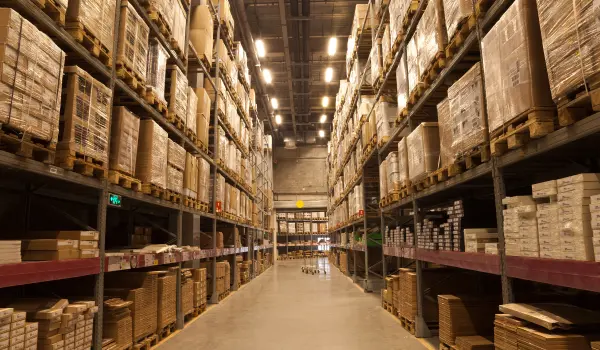
Behind every online order that arrives on time, in the right packaging, with the correct items inside — there is a fulfillment operation making it happen. For customers, the experience feels effortless. For the businesses managing it, the reality is far more complex.
As online shopping continues to accelerate across Canada, ecommerce fulfillment has become one of the most critical operational challenges facing growing brands. Getting it right means loyal customers, positive reviews, and scalable revenue. Getting it wrong means returns, refunds, and reputational damage that compounds with every mishandled order.
This guide covers everything Canadian online sellers need to know — from what ecommerce fulfillment means and what services are included, to how the process works in practice, what the latest industry statistics reveal, and how to determine when it is time to outsource.
What Does Ecommerce Fulfillment Mean?
Ecommerce fulfillment refers to the entire process of receiving, storing, processing, packing, and shipping online orders to end customers. It encompasses every physical step that occurs between a customer clicking “buy” on a website and the package arriving at their door.
Unlike traditional retail fulfillment — where products are shipped in bulk to brick-and-mortar stores — ecommerce fulfillment is built around individual consumer orders. Each order must be picked, packed, and shipped as a standalone parcel, often with unique combinations of products, quantities, and shipping destinations.
The scope of ecommerce fulfillment includes:
• Inventory receiving — Products are accepted at the warehouse from manufacturers or suppliers • Warehousing and storage — Inventory is organized and stored in a fulfilment centre until orders are placed • Order processing — Customer orders are captured, validated, and queued for fulfilment • Picking and packing — Items are retrieved from storage, inspected, and packed for shipment • Shipping — Packages are labelled, manifested, and handed to carriers for delivery • Returns management — Returned items are received, inspected, and either restocked or disposed of
For Canadian businesses selling through platforms like Shopify, Amazon, WooCommerce, or Etsy, ecommerce fulfillment is the operational backbone that determines whether the customer experience matches the brand promise.
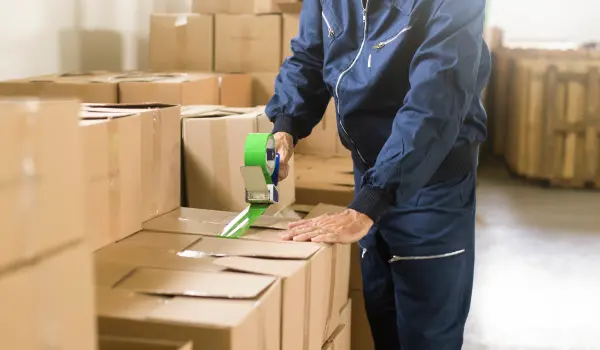
Ecommerce Fulfillment Statistics: The Numbers That Matter
Before diving deeper into operations, it is worth understanding the scale and impact of ecommerce fulfillment in today’s market. The following statistics illustrate why fulfillment performance is no longer optional — it is existential.
| Statistic | Insight |
|---|---|
| Canadian ecommerce sales exceeded $75 billion in recent years | The volume of orders requiring fulfillment continues to grow year over year across all product categories |
| 73% of consumers say shipping speed influences their purchase decisions | Fulfillment speed is no longer a bonus — it is a buying criterion that directly affects conversion rates |
| Over 60% of online shoppers have abandoned a brand after a poor delivery experience | A single fulfillment failure — late delivery, wrong item, damaged package — can permanently lose a customer |
| Returns account for 20–30% of all ecommerce orders | Returns processing is not an edge case. It is a core operational requirement that must be planned for from day one |
| Businesses using 3PL fulfillment providers report average shipping cost reductions of 10–15% | Volume-negotiated carrier rates through a fulfilment partner consistently outperform individual business shipping costs |
| 84% of consumers say packaging influences their perception of a brand | The unboxing experience — a direct output of the packing stage — shapes brand perception as much as the product itself |
These numbers underscore a fundamental truth: ecommerce fulfillment is not a back-office function. It is a customer-facing operation that directly influences revenue, retention, and brand equity.
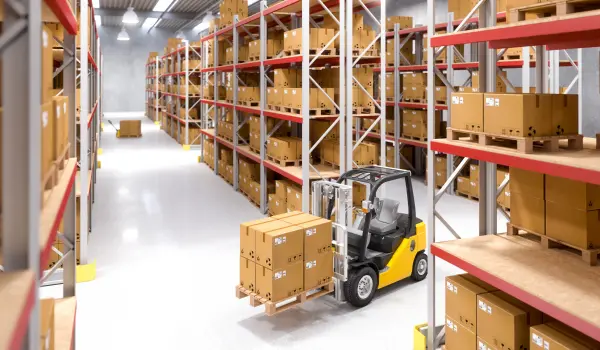
What Is Ecommerce Fulfillment Services?
Ecommerce fulfillment services are the outsourced logistics solutions provided by third-party fulfillment companies (3PLs) to handle the storage, processing, and shipping of online orders on behalf of ecommerce businesses.
Rather than renting warehouse space, hiring fulfilment staff, purchasing packing equipment, and negotiating carrier contracts independently, an online seller entrusts these functions to a dedicated fulfillment partner — paying only for the services consumed.
A comprehensive ecommerce fulfillment service typically includes:
Inventory Management
• Products are received at the fulfilment centre and logged into a warehouse management system (WMS) • Each SKU is assigned a storage location — bin, shelf, or pallet position — for efficient retrieval • Real-time inventory levels are maintained and made accessible through client dashboards or direct platform integration • Stock alerts notify the business when reorder thresholds are reached • Cycle counts and inventory audits are conducted regularly to maintain accuracy
Platform Integration
Modern ecommerce fulfillment services connect directly with the seller’s online store through automated integrations:
• Shopify — Orders are synced automatically the moment a customer completes checkout • Amazon (FBM — Fulfilled by Merchant) — Orders from Amazon’s marketplace are routed to the 3PL for fulfilment • WooCommerce — WordPress-based stores are connected through API or plugin integration • Etsy, eBay, and other marketplaces — Multi-channel sellers can consolidate all orders into a single fulfilment pipeline • Custom ERP and OMS connections — Larger businesses with proprietary order management systems can integrate through EDI or API
This automation eliminates manual data entry, reduces errors, and ensures that orders enter the fulfilment queue within seconds of being placed.
Pick, Pack, and Ship
The core physical operation of ecommerce fulfillment:
• Picking — Warehouse staff retrieve the ordered items from their storage locations using barcode-guided pick lists • Packing — Items are inspected, wrapped, and placed in appropriate packaging (mailers, boxes, padded envelopes) • Custom branding — Branded boxes, tissue paper, thank-you cards, promotional inserts, and custom tape can be included for sellers who prioritize the unboxing experience • Labelling — Shipping labels are generated based on the destination, weight, and selected service level • Carrier handoff — Packages are consolidated and picked up by the designated carrier
Shipping and Carrier Management
Fulfillment providers maintain relationships with multiple carriers to offer competitive rates and reliable delivery options:
• Canada Post — The most widely used carrier for domestic Canadian ecommerce shipments • FedEx — Preferred for expedited and cross-border deliveries • UPS — Strong for heavier parcels and B2B e-commerce shipments • Purolator — Popular for Canadian domestic express and business deliveries
Delibrex’s established partnerships with all four of these carriers ensure that the optimal shipping method is selected for each order — balancing speed, cost, and reliability.
Returns Processing (Reverse Logistics)
A complete ecommerce fulfillment service includes handling the return side of the equation:
• Return shipments are received at the warehouse and matched to the original order • Items are inspected for condition, completeness, and resale eligibility • Eligible products are restocked into sellable inventory • Damaged or unsellable items are quarantined for disposal or manufacturer return • Inventory records are updated in real time
For a broader look at how fulfilment services are priced in the Canadian market, the guide on order fulfillment services in Canada and what they cost provides a detailed breakdown.
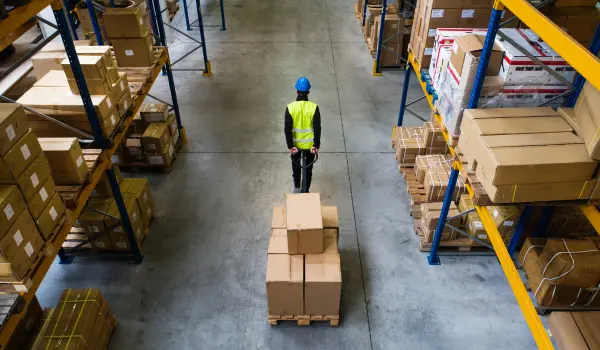
How Does Ecommerce Fulfillment Work?
Understanding the flow of an order from click to delivery provides clarity on how ecommerce fulfillment operations function in practice. Here is the step-by-step process:
Step 1: Customer Places an Order
A customer visits an online store — Shopify, Amazon, WooCommerce, or any connected platform — selects a product, and completes checkout. The order data (items, quantities, shipping address, service level) is captured by the platform.
Step 2: Order Is Transmitted to the Fulfilment Centre
Through the automated integration between the ecommerce platform and the 3PL’s warehouse management system, the order is transmitted instantly. No manual forwarding is required. The order enters the fulfilment queue and is prioritized based on shipping service level and daily cutoff times.
Step 3: Order Is Picked
A warehouse picker receives a pick list — either on a handheld device or printed sheet — specifying which items to retrieve and their exact locations within the warehouse. Each item is scanned at the point of pick to verify accuracy.
Step 4: Order Is Packed
At the packing station, the picked items are verified against the order, inspected for quality, and packed using the appropriate materials. If the seller has requested branded packaging or promotional inserts, these are included at this stage.
Step 5: Shipping Label Is Generated
The system selects the optimal carrier and service level based on the destination, package dimensions, weight, and cost parameters. A shipping label is printed and applied. The tracking number is generated and pushed back to the ecommerce platform — and, in most cases, directly to the customer via email or SMS.
Step 6: Package Is Shipped
The labelled package is placed in the designated carrier staging area. Carriers conduct scheduled pickups — typically daily — and the package enters the transportation network for delivery.
Step 7: Customer Receives the Order
The package is delivered to the customer’s specified address. Delivery confirmation is logged, and the order is marked as complete in both the 3PL’s system and the seller’s platform.
Step 8: Return Is Processed (If Applicable)
If the customer initiates a return, the process described in the returns management section above is activated. The item re-enters the fulfilment centre and is processed according to the seller’s return policy.
For businesses wanting to understand the broader logistics context behind this workflow, the guide on the order fulfillment process within the supply chain explains how each stage connects to the wider operational framework.
What Is Ecommerce Fulfillment Operations?
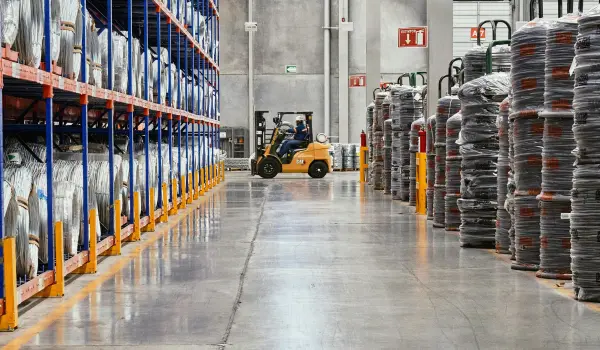
Ecommerce fulfillment operations refers to the day-to-day management and execution of all activities within a fulfilment centre that support online order processing. While the step-by-step process above describes the flow of a single order, operations encompasses the systems, staffing, and infrastructure that make that flow possible at scale.
Key operational elements include:
Warehouse Layout and Slotting
Products are strategically placed within the warehouse based on velocity (how frequently they are ordered), size, weight, and handling requirements. High-velocity SKUs are positioned closest to packing stations to minimize pick travel time. This discipline — known as slotting optimization — directly impacts fulfilment speed and labour efficiency.
Workforce Management
Fulfilment centres require trained staff for receiving, picking, packing, shipping, and returns processing. Workforce levels must be calibrated to match daily order volumes — with the ability to scale during peak periods like Black Friday, Cyber Monday, and the holiday shipping season.
Quality Control
Accuracy is the currency of ecommerce fulfillment. Operational quality control measures include:
• Barcode scanning at every handoff point (receiving, picking, packing, shipping) • Multi-point verification for high-value or multi-item orders • Packaging inspection to prevent damage in transit • Regular accuracy audits with documented error rates
Technology Systems
The warehouse management system (WMS) is the central nervous system of ecommerce fulfillment operations. It coordinates:
• Inventory tracking across all storage locations • Order routing and priority management • Pick path optimization to reduce warehouse travel • Carrier rate shopping and label generation • Real-time reporting and client dashboard access
Compliance and Specialized Handling
For certain product categories, ecommerce fulfillment operations must adhere to specific regulatory standards:
• Health Canada regulations — Required for online sellers distributing pharmaceutical products, natural health products, or medical devices • Food safety standards — Required for perishable or consumable products sold online • Hazardous materials compliance — Required for sellers offering chemical or restricted products
Delibrex’s warehousing facilities in Edmonton are purpose-built for this kind of operational versatility — supporting standard ecommerce inventory alongside Health Canada Licensed pharmaceutical storage, temperature-controlled environments, chemical and dangerous goods handling, and food-grade warehousing.
Who Are Ecommerce Fulfillment Providers?
Ecommerce fulfillment providers are third-party logistics companies (3PLs) that specialize in managing the storage, processing, and shipping of online orders on behalf of ecommerce businesses. They are the operational partners behind thousands of online stores across Canada.
The ecommerce fulfillment provider landscape includes several categories:
| Provider Type | Description | Best For |
|---|---|---|
| National 3PL providers | Full-service logistics companies with warehouse facilities, carrier networks, and multi-industry capabilities | Businesses needing comprehensive warehousing, fulfillment, and distribution under one roof |
| Ecommerce-only fulfillment centres | Providers focused exclusively on direct-to-consumer online order shipping | Pure-play ecommerce brands with straightforward product lines |
| Marketplace fulfillment programs | Platform-operated programs like Amazon FBA (Fulfilled by Amazon) | Sellers whose primary or sole channel is the marketplace itself |
| Regional and local 3PLs | Providers with strong coverage in a specific geographic area | Businesses targeting regional markets or needing localized fulfillment |
For Canadian online sellers, partnering with a Canadian-based 3PL provider offers distinct advantages — domestic carrier rate access, familiarity with Canadian customs and tax requirements, proximity to Canadian customers, and compliance with Canadian regulatory standards.
Delibrex operates as a full-service national 3PL with deep roots in Western Canada. With two Edmonton warehouses, partnerships with Canada Post, FedEx, UPS, and Purolator, and over 50 years of logistics experience as a family-owned Canadian business, the infrastructure is built to support ecommerce brands at every stage of growth.
When Should an Ecommerce Business Outsource Fulfillment?
Not every online business needs a 3PL partner from day one. However, there are clear signals that indicate when it is time to transition from self-fulfillment to an outsourced solution:
• Order volume exceeds 100–200 orders per month — At this threshold, self-fulfillment begins consuming significant time and becomes increasingly error-prone • Fulfilment errors are rising — Wrong items, late shipments, and packaging mistakes signal that internal operations are outpacing capacity • Storage space is running out — Garages, spare rooms, and small storage units become impractical as inventory grows • Shipping costs feel unsustainable — Individual business shipping rates are significantly higher than the volume-negotiated rates available through a 3PL • Customer complaints about delivery are increasing — Negative reviews related to shipping speed, packaging quality, or order accuracy indicate a systemic operational issue • Time spent on logistics is stealing from growth activities — If the founder or operations team is spending more time packing boxes than building the business, the balance has tipped
The transition to outsourced ecommerce fulfillment does not have to be all-or-nothing. Many businesses begin by outsourcing a portion of their inventory — testing the 3PL’s performance — before migrating the full product line.
For businesses ready to explore what fulfillment involves and what it costs, a transparent conversation with an experienced provider is the most effective first step.
How to Choose the Right Ecommerce Fulfillment Partner
Selecting a fulfilment partner is one of the most consequential decisions an ecommerce business can make. The wrong choice results in shipping delays, inventory errors, and customer churn. The right choice creates a foundation for scalable, reliable growth.
Key criteria to evaluate:
• Platform integration — The provider must support seamless, automated connections with the seller’s ecommerce platform (Shopify, Amazon, WooCommerce, etc.) • Geographic location — Warehouse proximity to the customer base directly impacts shipping speed and cost. For Western Canadian sellers, Edmonton offers a strategically central position • Carrier network — A multi-carrier approach ensures competitive rates and delivery reliability • Scalability — The provider should be able to handle current volumes and grow alongside the business without service disruptions • Transparency and reporting — Real-time inventory visibility, order tracking, and performance reporting are essential • Compliance capabilities — For sellers in regulated categories (health, food, chemical), the provider must hold the necessary certifications • Track record — Experience and longevity matter. A provider with decades of proven performance offers reliability that newer operations cannot guarantee • Pricing clarity — All fees — storage, fulfillment, shipping, returns, value-added services — should be clearly outlined and predictable
Scale Your Online Business with Reliable Ecommerce Fulfillment
Ecommerce fulfillment is the engine that converts online orders into delivered products and satisfied customers. As order volumes grow, the complexity and stakes of fulfillment operations grow with them. What works at 50 orders per month becomes unsustainable at 500 — and unmanageable at 5,000.
The right fulfillment partner absorbs that complexity. Storage is managed. Orders are processed accurately. Shipments reach customers on time. Returns are handled professionally. And the business is free to focus on what it does best — building products, growing brands, and acquiring customers.
Delibrex has been delivering trusted, scalable logistics solutions for Canadian businesses for over 50 years. With comprehensive ecommerce fulfillment services, two Edmonton warehouses, and a carrier network that covers every corner of Canada, the operational foundation is ready.
Request a free quote today and discover how Delibrex can power your ecommerce fulfillment.
Frequently Asked Questions
What is ecommerce fulfillment?
Ecommerce fulfillment is the complete process of receiving, storing, picking, packing, and shipping online orders to end customers. It includes inventory management, order processing, carrier coordination, and returns handling — all the operational steps required to deliver products purchased through an online store.
What is ecommerce fulfillment services?
Ecommerce fulfillment services are outsourced logistics solutions provided by third-party fulfillment companies. These services include inventory storage, platform integration, pick-and-pack operations, shipping coordination, and returns processing — allowing online sellers to scale without managing warehouse operations internally.
How does ecommerce fulfillment work?
When a customer places an order online, the order data is automatically transmitted to the fulfillment centre. Warehouse staff pick the items, pack them securely, generate a shipping label, and hand the package to a carrier for delivery. Tracking information is sent to the customer throughout the process.
What does ecommerce fulfillment operations mean?
Ecommerce fulfillment operations refers to the daily management of all warehouse activities that support online order processing — including warehouse layout, workforce scheduling, quality control, technology systems, and compliance procedures. It is the infrastructure that enables individual orders to be processed accurately at scale.
What are some key ecommerce fulfillment statistics?
Notable statistics include: over 73% of consumers say shipping speed influences purchase decisions, returns account for 20–30% of ecommerce orders, businesses using 3PL providers report 10–15% average shipping cost reductions, and 84% of consumers say packaging influences brand perception.